
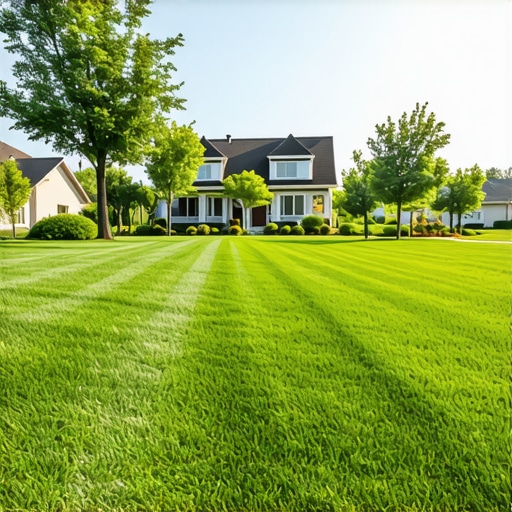
Low-water curb appeal isn’t just a design trend for 2026; it’s a structural necessity for homeowners facing rising utility costs and tightening municipal water restrictions. If you think a beautiful yard requires forty gallons of water per square foot every summer, you’ve been listening to the wrong contractors. Real landscaping expertise involves working with the biology of the soil rather than fighting it with a chemical sprayer. We are moving toward a ‘set-it-and-forget-it’ aesthetic that relies on fine fescue blends—grasses that grow slowly, require minimal nitrogen, and actually prefer to be left alone.
The Chemical Nightmare: Why Traditional Lawns Fail
Traditional lawn failures in 2026 are primarily caused by excessive high-nitrogen fertilization during heat waves, leading to salt-induced root desiccation and soil microbial death. A homeowner called me in a panic last August after they completely torched their front lawn by applying three times the recommended rate of quick-release nitrogen. In 95-degree heat, those fertilizer salts didn’t feed the grass; they sucked every ounce of moisture out of the root cells through osmotic pressure. By the time I arrived, the soil was hydrophobic, and the turf was a brittle, copper-colored mess. This is the ‘mow-and-blow’ legacy: a cycle of chemical dependency that leaves the yard vulnerable to the slightest drought. A no-mow fescue blend avoids this entirely by maintaining a deep root architecture that doesn’t demand constant synthetic feeding.
The Science of Fine Fescue Blends
No-mow fescue blends consist of Hard Fescue, Sheep Fescue, and Chewings Fescue, which thrive on low-input maintenance and offer superior drought resistance compared to traditional Kentucky Bluegrass. These varieties are endophyte-enhanced, meaning they harbor beneficial fungi that produce alkaloids toxic to surface-feeding insects like chinch bugs. From a horticultural perspective, the leaf blades are significantly narrower, which reduces the surface area for evapotranspiration. This means the plant retains internal moisture far longer than wide-bladed turf. When you stop mowing these blends, they flop over to create a soft, meadow-like carpet that naturally shades the soil, further reducing evaporation and suppressed weed germination through natural competition.
“Fine fescues are the most shade-tolerant of the cool-season grasses and can persist on poor, acidic soils where other species fail.” – Penn State Extension Agricultural Manual
How much modified gravel do I need for a patio base?
For a standard paver install adjacent to your fescue, you need a minimum of 4 to 6 inches of compacted 21A or 3/4-inch modified gravel. To calculate this, multiply the square footage by the depth in feet (e.g., 0.5 feet for 6 inches) and divide by 27 to get the cubic yardage. Don’t skip the compaction; if the base isn’t hit with a plate compactor every 2 inches, your ‘curb appeal’ will be a series of dangerous trip hazards within two seasons.
The Blueprint: Installing No-Mow Sod and Seed
Successful installation of no-mow fescue requires total eradication of existing weed seed banks, a 2% minimum grade for drainage, and a soil pH adjusted to between 6.0 and 7.0. Most ‘hacks’ will just throw seed over old thatch. That’s a waste of money. You need to strip the old sod, core aerate to a depth of six inches to break up compaction, and till in organic compost to jumpstart the soil biology. If you are doing a sod install, the edges must be tucked tightly to prevent the root flares from drying out. For seeding, you need a starter fertilizer with a high phosphorus count (the middle number in the NPK ratio) to encourage lateral root development rather than vertical leaf growth.
| Feature | Traditional Turf (Bluegrass) | No-Mow Fescue Blends |
|---|---|---|
| Water Frequency | 3x Per Week (1 inch total) | 1x Per 10-14 Days |
| Mowing Schedule | Every 5-7 Days | 2-3 Times Per Year |
| Nitrogen Requirement | 4-6 lbs per 1,000 sq ft/year | 0.5-1 lb per 1,000 sq ft/year |
| Root Depth | 2-3 Inches | 6-9 Inches |
| Heat Tolerance | Dormancy at 85°F | Active growth up to 90°F |
Can I install no-mow sod over existing grass?
No, you cannot install no-mow fescue over existing grass because the old turf will rot underneath, creating an anaerobic environment that breeds Pythium blight and prevents the new roots from penetrating the soil. You must remove the existing vegetation using a sod cutter or a non-residual herbicide like glyphosate, then wait at least 7 days before prepping the site. Skipping this step ensures the new fescue will peel up like a cheap rug within a month.
Irrigation Logic and Yard Cleanup
Irrigation for no-mow fescue must transition from frequent shallow misting to deep, infrequent soakings to force the root system to chase receding moisture levels deep into the subsoil. In 2026, smart irrigation controllers are standard. You should be using weather-sensing tech that skips cycles when rain is detected. Yard cleanup is also different for these blends. You don’t rake them clean. You leave a light layer of clippings to return nutrients to the soil. If you see ‘thatch’ buildup, it’s usually because you’ve over-watered or over-fertilized, killing the beneficial microbes that should be breaking that material down. Stop the chemicals. Let the soil breathe.
“A dense turfgrass canopy is the primary defense against weed invasion, reducing the need for chemical intervention and promoting long-term soil health.” – Texas A&M Agronomy Research
- Test soil pH before any seeding or sod install. Aim for 6.5.
- Perform a 24-hour percolation test to check for drainage issues.
- Apply a pre-emergent in early spring to block crabgrass.
- Set mower height to 4 inches if you choose to trim at all.
- Hand-pull broadleaf weeds to avoid broad-spectrum herbicide damage.
The hard truth about curb appeal is that it starts six inches underground. If your soil is compacted clay, no amount of ‘no-mow’ seed will save you. You have to fix the drainage first. Hydrostatic pressure from poor grading will drown your fescue roots just as fast as a drought will fry them. In my twenty years of doing this, the clients who have the best yards are the ones who stop trying to dominate nature and start providing the right environment for the biology to do the work. It isn’t magic; it’s engineering. It will thrive if you let it. Don’t over-water it. Don’t over-feed it. Just watch it grow.