
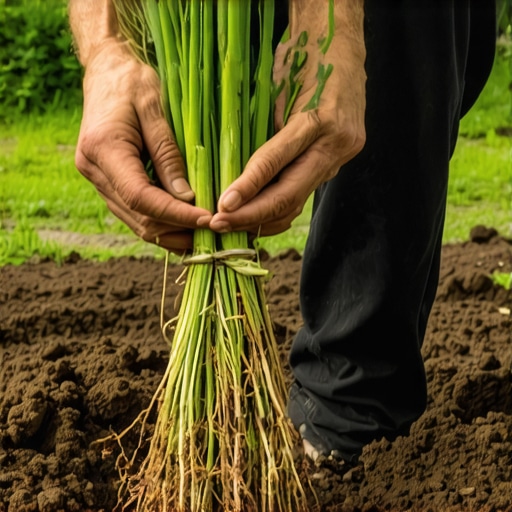
The Forensic Autopsy of a Failed Lawn Cleanup
I always drill into my new crew members: if you don’t fix the soil structure first, every plant you put in the ground is just expensive compost. I remember a site last June where the homeowner had spent three weekends ‘weeding’ their half-acre lot. They used a standard hand trowel and a lot of upper body strength. Two weeks later, the dandelions were back, twice as thick and twice as angry. This happens because the vertical pull tactic is the only way to extract the 12-inch taproot of Taraxacum officinale without triggering a regenerative response from the remaining root fragments. When you snap a dandelion root, you aren’t killing it. You are essentially performing a crude form of root grafting that forces the plant to send up multiple crowns from the break point. It is a biological survival mechanism that defies lazy yard cleanup efforts.
“The dandelion taproot is a perennial powerhouse, storing vast amounts of carbohydrates that allow for rapid regrowth even after significant foliage loss.” – Penn State Extension Agronomy Manual
Why Vertical Extraction Trumps Surface Chopping
Vertical extraction utilizes physics and soil moisture to slide the root out of the earth intact, rather than shearing it off against compacted soil layers. Effective dandelion removal requires a fulcrum-based weeding tool that penetrates at least 10 inches deep to loosen the soil around the central taproot before applying upward pressure. If you apply lateral force, the root snaps. If you pull too fast, the root snaps. The goal is to overcome the friction of the soil particles without exceeding the tensile strength of the root itself. This is why irrigation is your best friend before a deep weed extraction. Trying to pull dandelions from dry, baked clay is a fool’s errand. You will fail. The soil needs to be at field capacity to allow the root to slide out. If your lawn is a mess of compacted dirt, you might be better off looking at a full sod install rather than fighting a losing battle against established weeds. Landscaping is 10% aesthetics and 90% soil management.
What tool is best for removing deep dandelion roots?
The best tool for removing deep dandelion roots is a long-handled stand-up weeder with stainless steel claws or a dedicated ‘dandelion knife’ that features a notched tip to grip the root deep underground. These tools allow the operator to apply 150 PSI of pressure directly to the root base while maintaining a vertical orientation, which is critical for total extraction in heavy clay soils.
The Engineering of Soil Density and Root Resistance
Dandelions thrive in compacted soil where turfgrass fails. When we talk about landscaping, we are talking about managing pore space in the soil. A dandelion’s taproot can penetrate subsoil layers that are as hard as concrete. By pulling these roots vertically, you are actually performing a micro-aeration on your lawn. However, you must fill the void. Leaving a 1-inch diameter hole 10 inches deep is an invitation for the next wind-blown seed to take up residence. I make my guys carry a bucket of sand and compost mix to plug every hole. This prevents the surrounding soil from collapsing and maintains the grade. If you skip this, your yard will feel like a minefield by mid-July. Soil pH also plays a massive role here. Dandelions love acidic, low-calcium environments. If your soil test comes back below 6.0, you are basically rolling out a red carpet for weeds.
| Tool Type | Depth Capability | Root Intactness Rate | Ideal Soil Condition |
|---|---|---|---|
| Hand Trowel | 3-4 inches | 15% | Loose Loam |
| Dandelion Knife | 8-10 inches | 75% | Moist Clay |
| Stand-up Claw | 12 inches | 90% | Field Capacity |
| Cape Cod Weeders | 2-3 inches | 5% | Sandy Soil |
The Biological Clock: Timing Your Extraction
You cannot just pull weeds whenever you feel like it. Biology has a schedule. The most effective time for the vertical pull tactic is during the early spring bloom or late fall when the plant is actively translocating nutrients to the root system. In the heat of summer, the root becomes brittle. It will shatter. I’ve seen homeowners spend thousands on irrigation systems only to over-water and create a fungal nightmare, but they still can’t get the weeds out because they don’t understand the seasonal moisture curve. If you are doing a yard cleanup, do it after a steady rain. Not a downpour, but a soaking rain. The soil should feel like a wrung-out sponge. If it’s muddy, you’ll ruin the soil structure. If it’s dry, you’ll break the root. It’s a narrow window. Don’t miss it.
“Compaction is the primary driver of weed encroachment in managed turfgrass systems, as it limits the gas exchange necessary for desirable root respiration.” – Texas A&M AgriLife Extension
Does pouring boiling water kill dandelion roots permanently?
Boiling water is a temporary fix that rarely reaches the bottom of a 12-inch taproot, meaning the plant will often regenerate from the surviving lower root tissue within 14 to 21 days. While it may kill the surface foliage and the top two inches of the crown, it lacks the systemic penetration required to neutralize the entire biological structure of a mature weed.
Remediation Checklist for a Weed-Free Lawn
- Test soil pH and adjust with pelletized lime if below 6.5.
- Core aerate the lawn to a depth of 3 inches to reduce compaction.
- Calibrate irrigation to deliver 1 inch of water per week in a single session.
- Mow at a height of 3.5 to 4 inches to shade out emerging weed seedlings.
- Top-dress with 1/4 inch of organic compost to boost soil microbiology.
If you’ve let the yard go for five years, pulling weeds isn’t enough. You might need to kill the whole mess and start over with a fresh sod install. There is no shame in hitting the reset button. Sometimes the seed bank in the soil is so saturated that you’ll be fighting for decades. Dig it out. Grade it properly. Fix the drainage. Put down high-quality fescue or bluegrass. Then, and only then, will your vertical pull tactic be a maintenance task rather than a full-time job. It will take work. Don’t skip the prep. Your back will thank you next year.