
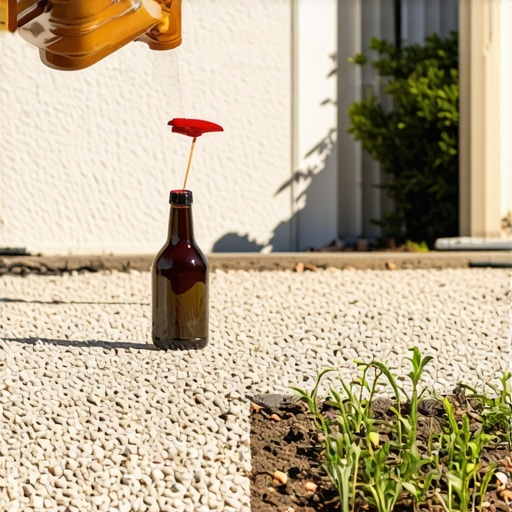
The Forensic Autopsy of a Failing Gravel Driveway
You look out the window and see a green haze creeping over what used to be a crisp, gray stone expanse. It starts in the tire ruts and spreads toward the edges. This isn’t just a cosmetic issue; it is a structural failure of your hardscape. I recently got called out to tear up a $30,000 patio that was sinking because the previous contractor ignored the organic accumulation in the base layer. Weeds aren’t just growing on top of your gravel; they are living in the ‘fines’—the dust, silt, and decomposing leaves—that have filtered down between the stones. This organic matter holds moisture, creates a root zone, and eventually leads to frost heaving and total base destabilization. If you don’t kill these weeds and stop the organic cycle, your driveway will eventually turn into a muddy mess of expensive compost.
Does Vinegar Actually Kill Weeds Permanently?
Vinegar works as a contact herbicide through desiccation, where the acetic acid dissolves the waxy cuticle of the leaf, causing the plant to lose moisture and die. For gravel driveways, a standard 5% grocery store vinegar is useless; you require 20% to 30% industrial-grade acetic acid to achieve a total kill of the plant’s cellular structure.
“Acetic acid is most effective on small annual weeds and is less effective on perennial weeds because it only kills the foliage, not the roots.” – Penn State Extension
The Science of the Vinegar, Salt, and Soap Mix
To turn vinegar into a professional-grade herbicide, you need three components: the acid (the killer), the salt (the sterilant), and the soap (the surfactant). The surfactant is critical. Without it, the vinegar just beads off the waxy leaves of a dandelion or crabgrass. The soap breaks the surface tension, allowing the acid to coat the leaf entirely. The salt—specifically sodium chloride—is what provides the ‘permanent’ fix for gravel driveways. It creates an osmotic imbalance in the soil, effectively dehydrating any seeds that try to germinate in the gravel fines. Warning: Never use this mix near a fresh sod install or garden beds. Salt ruins soil for years. It is for driveways only.
The Master Mix Recipe
- 1 Gallon of 20% or 30% Industrial Vinegar.
- 2 Cups of Epsom Salt or Table Salt.
- 1/4 Cup of Concentrated Liquid Dish Soap.
- A pressurized pump sprayer with plastic components (acid eats metal).
Why Your Landscaping and Irrigation Habits Are Feeding the Weeds
Most homeowners inadvertently farm weeds in their gravel. If your irrigation system is over-spraying onto the driveway, you are providing the one thing weeds need to survive in a hot stone environment: consistent water. A high-end landscaping plan should always include a 12-inch buffer zone between turf and gravel to prevent sod install roots from creeping and to ensure sprinklers don’t hit the stone. During your seasonal yard cleanup, if you are using a leaf blower to push debris into the gravel instead of away from it, you are literally planting the seeds for next year’s headache.
| Treatment Method | Application Frequency | Cost Factor | Environmental Impact |
|---|---|---|---|
| 5% White Vinegar | Weekly (Ineffective) | Low | Low |
| 30% Industrial Vinegar | Every 3-4 Months | Medium | Moderate (Acidic) |
| Vinegar + Salt Mix | Twice Yearly | Medium | High (Soil Sterilant) |
| Propane Torch | Monthly | High (Fuel) | Low |
How much salt do I add to vinegar to kill weeds?
For a standard 1-gallon sprayer, 2 cups of salt is the tipping point for effective soil sterilization. This concentration is high enough to prevent germination in the top 2 inches of the gravel fines without leaching too deep into the groundwater table, provided you don’t over-saturate the area. Don’t skip the salt if you want lasting results.
Will vinegar damage my gravel driveway?
Vinegar will not damage granite, river rock, or pea gravel. However, if you have a limestone or marble chip driveway, the acetic acid will cause a chemical reaction (effervescence) that slowly dissolves the stone over time. For limestone, stick to manual yard cleanup or propane flaming to avoid pitting the material. [image_placeholder]
“A retaining wall doesn’t fail because of the stone; it fails because of the water trapped behind it, and a driveway fails when organic matter replaces the structural integrity of the stone base.” – Hardscape Engineering Axiom
The Action Plan: Remediating a Weed-Choked Driveway
You cannot simply spray and walk away if the driveway is already overgrown. You must follow the forensic remediation process. First, perform a mechanical yard cleanup. Use a hula-hoe or a stiff-tine rake to pull up the large clumps of grass. This exposes the soil fines buried under the rock. Second, apply the vinegar mix during the heat of the day. Acetic acid needs UV light and heat to accelerate the desiccation process. Apply it when the sun is at its zenith—typically between 10 AM and 2 PM. Third, wait 48 hours for the plants to turn brittle and brown. Finally, use a power broom or a heavy-duty leaf blower to remove the dead organic matter. If you leave the dead weeds there, they simply become the soil for the next generation of seeds. It will rot. Don’t skip the removal phase.
Checklist for Driveway Maintenance
- Inspect drainage for hydrostatic pressure buildup at the edges.
- Verify that irrigation heads are adjusted to 0% driveway overlap.
- Clear all organic leaf litter before it breaks down into the stone.
- Apply the vinegar/salt barrier before the spring germination window.
Landscaping is a battle against the natural tendency of the earth to reclaim disturbed ground. If you treat your driveway like a piece of engineering rather than a pile of rocks, you’ll stop the weeds before they start. Use the science of pH and salt to your advantage, and keep the ‘mow-and-blow’ hacks away from your hardscape.