
Cleaning Pine Needles from Landscape Rock: The Professional Hardscaper’s Guide
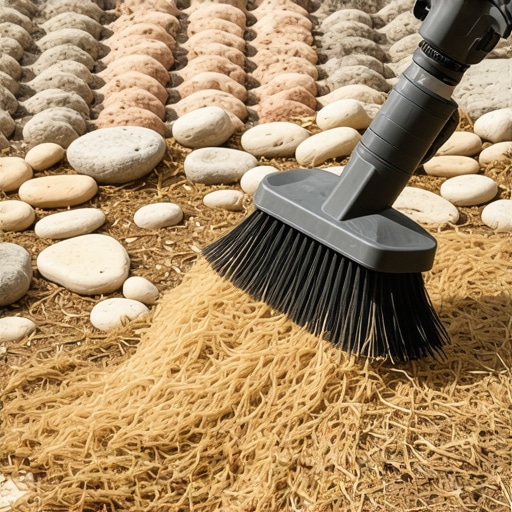
The best method for cleaning pine needles out of landscape rock involves using a high-CFM (Cubic Feet per Minute) backpack blower at a shallow angle to lift debris without displacing the stone mulch or river rock. For deeply embedded needles, a specialized power broom or a high-suction industrial vacuum with a filtered intake is necessary to prevent stone ingestion.
The Apprentice Lesson: Why Debris is the Silent Killer of Hardscapes
I always drill into my new crew members: if you don’t fix the soil grading and keep the rock beds clean, every plant you put in the ground is just expensive compost. I remember an apprentice, eager to finish a yard cleanup, who just blew the needles into the corner of a retaining wall. Three years later, that wall was leaning two inches out of plumb. Why? Because those needles decomposed into organic silt, clogged the geotextile fabric, and trapped hydrostatic pressure behind the block. It cost the homeowner $12,000 to rebuild a wall that should have lasted fifty years. Clean rock isn’t about aesthetics; it’s about structural integrity and drainage. Pine needles are particularly insidious because they are aerodynamic and acidic. They wedge themselves into the 1-inch to 3-inch crushed stone and refuse to leave. If you leave them, they turn into soil. Once you have soil in your rocks, you have a weed nursery. No amount of pre-emergent will save you then. You’ll be looking at a full sod install or a total rock replacement within five seasons.
“Organic matter accumulation in mineral mulch layers facilitates weed seed germination and restricts the gas exchange necessary for healthy root respiration.” – University of California Agriculture and Natural Resources
The Physics of Removal: CFM vs. MPH
Most homeowners buy blowers based on MPH (Miles Per Hour), but in landscaping, CFM is king. A high MPH with low CFM is like a needle-thin stream of water; it just pierces the pile. You need volume to move needles. For landscape rock like 3/4-inch trap rock or drainage gravel, you need a blower pushing at least 600 CFM. This creates a cushion of air that lifts the lighter pine needles while the heavier stone stays put. Don’t point the nozzle straight down. That forces needles deeper into the weed barrier. Angle the nozzle at 30 degrees. Work in small 4-foot sections. It is tedious. It is hard on the back. But it is the only way to ensure the rock remains a functional drainage system. If your irrigation heads are located within these rock beds, be extremely careful. High-velocity air can strip the caps right off a pop-up sprinkler or shove grit into the wiper seal, causing a leak that will rot your foundation.
Comparing Cleaning Methods for Pine Debris
| Method | Efficiency | Stone Displacement | Equipment Cost | Best For |
|---|---|---|---|---|
| Backpack Blower (600+ CFM) | High | Moderate | $400 – $600 | Routine Maintenance |
| Industrial Yard Vacuum | Moderate | Low | $1,200+ | Heavy Accumulation |
| Manual Raking (Tine Rake) | Very Low | High | $30 | Small Areas |
| Power Brooming | High | High | $500+ | Deep Remediation |
How do you get pine needles out of rocks without moving the rocks?
The secret is the air-gap technique. By hovering the blower nozzle approximately 12 inches above the surface and using a sweeping motion, you create a low-pressure zone that sucks the needles upward. This works best on river rock or cobblestone larger than 2 inches. If you are dealing with smaller pea gravel, you are in for a fight. Pea gravel has a low mass-to-surface-area ratio, meaning it flies away almost as easily as the needles. In those cases, we often use a shop-vac with a custom-built screen over the nozzle. The screen allows air and needles to pass through but is too small for the stones to enter the hose. It is slow, but it’s cheaper than buying five tons of new stone.
Will a leaf vacuum pick up landscape rocks?
Standard residential leaf vacuums will absolutely suck up stones and shatter their plastic impellers. Do not attempt this. If you must use suction, you need an industrial-grade debris loader with a steel impeller. Even then, we use a rock-guard attachment. Professional yard cleanup crews use these machines to vacuum needles out of mulch beds and rock borders. If a stone hits the impeller, you’ll know—it sounds like a grenade going off in a tin can.
“A retaining wall doesn’t fail because of the stone; it fails because of the water trapped behind it, often caused by organic debris clogging the drainage stone.” – Hardscape Engineering Axiom
The Step-by-Step Professional Remediation Process
- Step 1: Perimeter Clearing. Blow needles away from irrigation valves and hardscape edges first.
- Step 2: The Lift Phase. Use a backpack blower to lift the top layer of dry needles. Wet needles will not move; wait for 48 hours of sun.
- Step 3: Screening. For heavily impacted beds, we use a portable trommel screen. We shovel the rock in, the screen shakes the needles and dirt out, and the clean rock comes out the bottom.
- Step 4: Chemical Prevention. Apply a pre-emergent herbicide directly to the cleaned rock to prevent the seeds that fell with the needles from germinating.
- Step 5: Irrigation Check. Ensure no needles are lodged in drip emitters or spray heads.
Impact on Future Landscaping and Sod Installs
If you plan on a sod install adjacent to these rock beds, cleanliness is mandatory. Pine needles are highly acidic (pH 3.2 to 3.8). As they wash from the rock into your new Turfgrass, they can lower the soil pH, leading to nutrient lockout and nitrogen deficiency. Your $2,000 pallet of Kentucky Bluegrass will turn yellow and thin out within the first year. Don’t skip the cleanup. It is the foundation of every high-end landscaping project. Use a soil probe to check the compaction under your rock beds. If it’s too tight, the water won’t drain, and the needles will just sit there and rot. It’s a cycle of failure that starts with a single tree. Cut the lower limbs of the pines to reduce the needle drop and increase airflow. It won’t stop the problem, but it will give you a fighting chance. Maintenance isn’t a suggestion; it’s a requirement for a functional yard.”