
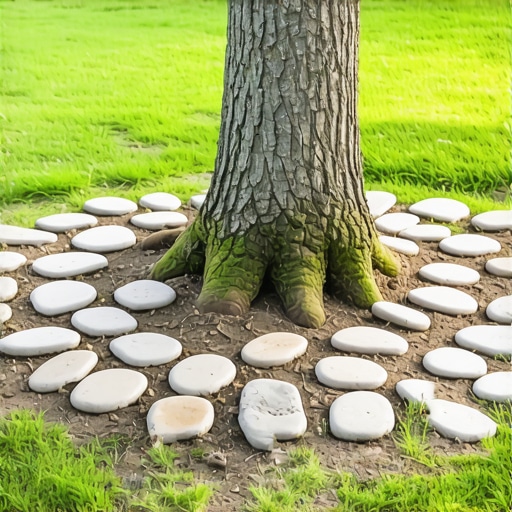
The Structural Physics of Flagstone Tree Rings
Constructing a flagstone tree ring is not a cosmetic exercise; it is a specialized hardscaping project that requires an understanding of soil compaction, hydrostatic pressure, and arboriculture. To do it right, you must create a level, stable perimeter using natural stone while ensuring the root flare of the tree remains exposed to prevent cambium rot and girdling roots. Most amateurs fail because they treat the ring as a wall rather than a breathable, flexible boundary. I once walked onto a job site where a homeowner had stacked four layers of heavy fieldstone directly over a young Oak tree root zone. The weight was so immense it had crushed the macropores in the soil, effectively suffocating the tree. It was a $5,000 mistake that could have been avoided with a simple understanding of bulk density and soil aeration. Don’t be that person. Real landscaping is about civil engineering at a garden scale.
“A retaining wall or stone ring doesn’t fail because of the stone; it fails because of the water trapped behind it or the lack of a proper base.” – Hardscape Engineering Axiom
The Forensic Autopsy: Why Most Tree Rings Fail
The failure of a tree ring usually begins six inches underground. Most DIYers and ‘mow-and-blow’ crews simply toss some flagstone on top of the grass and call it a day. Within one freeze-thaw cycle, the stones shift, the sod install underneath decays into a slimy mess of anaerobic bacteria, and the ring looks like a pile of rubble. I recently did a ‘hardscape autopsy’ on a $30,000 backyard project where the previous contractor used heavy Pennsylvania Blue flagstone but skipped the compacted aggregate base. The result? The stones sank four inches on the downhill side, creating a dam that trapped water against the tree trunk. This moisture invited Phytophthora, a soil-borne pathogen that rotted the tree from the inside out. We had to crane the tree out and start from scratch. If you don’t fix the soil grading and the base layer first, every stone you lay is just expensive debris. You must understand that the weight of flagstone (often 150 lbs per cubic foot) requires a foundation that can withstand hydrostatic pressure and seasonal shifting.
Selecting the Right Flagstone for Durability and Drainage
Choosing the right flagstone depends on your USDA hardiness zone and the specific mineralogy of the stone, as sedimentary rocks like sandstone or limestone handle moisture very differently than metamorphic rocks like slate. You want stones that are at least 1.5 to 2 inches thick to prevent cracking under the weight of maintenance equipment or human traffic. Sandstone flagstone is excellent for its natural grip and permeability, whereas slate can be too brittle for a heavy ring. Consider the thermal mass of the stone as well; dark stones can radiate heat into the root zone during high summer, potentially stressing trees that prefer cooler soil temperatures. Always source from a local nursery or stone yard rather than a big-box retailer. Big-box ‘flagstone’ is often thin, irregular, and prone to spalling, which is when the layers of stone peel apart due to water ingress and freezing.
| Material Property | Natural Flagstone | Concrete Pavers | Timber/Wood |
|---|---|---|---|
| Average Lifespan | 50+ Years | 20-30 Years | 5-10 Years |
| Permeability | High (at joints) | Low | Medium |
| Weight/Stability | Very High | High | Low |
| Thermal Retention | Moderate | High | Low |
| Resistance to Rot | Absolute | High | None |
How deep should you dig for a flagstone tree ring?
For a stable flagstone tree ring, you must excavate a trench at least 4 to 6 inches deep to accommodate a 2-inch compacted gravel base and 1 inch of leveling sand. This depth ensures the stone sits partially below the grade line, preventing lateral movement and providing a solid foundation that resists frost heave. Digging too shallow is the primary cause of stone migration and turf encroachment. You aren’t just making a hole; you are creating a foundation. The bottom of your trench should be tamped until it has the density of a paved road. If your tamper bounces, you are done. If it sinks, keep going. Soil density is the only thing standing between your ring and a messy collapse.
The Ground-Up Build: A Step-By-Step Engineering Guide
Installation begins with the drip line. You never want to build your ring inside the critical root zone if you can help it, but at a minimum, keep it away from the root flare. The 80% rule applies here: 80% of the work is the excavation and the base.
- Step 1: Mark the Radius. Use a string line from the center of the trunk to ensure a perfect circle. Precision matters for irrigation efficiency later.
- Step 2: Excavate and Grade. Remove all sod and organic material. If you leave grass under the stone, it will rot, create a void, and your ring will tilt. Slope the trench slightly away from the tree to manage drainage.
- Step 3: Base Layer. Add 2 inches of modified gravel (3/4-inch minus). This material locks together to form a rigid structure.
- Step 4: Compaction. Use a hand tamper or a vibrating plate compactor. Do not skip this. An uncompacted base is a failed base.
- Step 5: Laying the Stone. Place your flagstones, leaving small gaps for polymeric sand or fine gravel. This allows for gaseous exchange between the soil and the atmosphere.
- Step 6: Backfilling. Use a high-quality topsoil or mulch, but never bury the root flare.
“A tree’s root system is its lifeblood; burying the flare is a death sentence by slow suffocation.” – Forestry Extension Manual
Will a stone tree ring damage my tree roots?
A stone tree ring will only damage roots if it is installed too deep, too close to the trunk, or if it uses heavy non-porous materials that compact the soil. By using flagstone with open joints and a porous aggregate base, you actually protect the root zone from mower blight and soil compaction caused by foot traffic. The key is to avoid excavation of large structural roots. If you hit a root larger than 2 inches in diameter during your trenching, stop. Move the ring out or bridge over the root with a thinner layer of stone. Respect the cambium layer; it is the only part of the tree that is actually ‘alive’ and growing in diameter.
Managing Irrigation and Yard Cleanup
Once the ring is set, your irrigation strategy must change. Stone rings can act as a heat sink or a moisture trap. If you have an existing sprinkler system, ensure the heads are adjusted so they don’t hit the stone and bounce water back onto the trunk. This leads to fungal cankers. I recommend converting the area inside the ring to drip irrigation. This delivers water directly to the rhizosphere without wasting it on the stones. For yard cleanup, a stone ring makes life easier. You no longer have to string-trim against the bark, which prevents mechanical damage to the tree. Use a leaf blower on a low setting to clear debris from the stones; don’t let organic matter build up in the joints or it will eventually turn into soil and sprout weeds. Maintenance isn’t just about aesthetics; it’s about preserving the structural integrity of the hardscape and the biological health of the tree. Do the work once, do it right, and your landscaping will outlast your mortgage.