
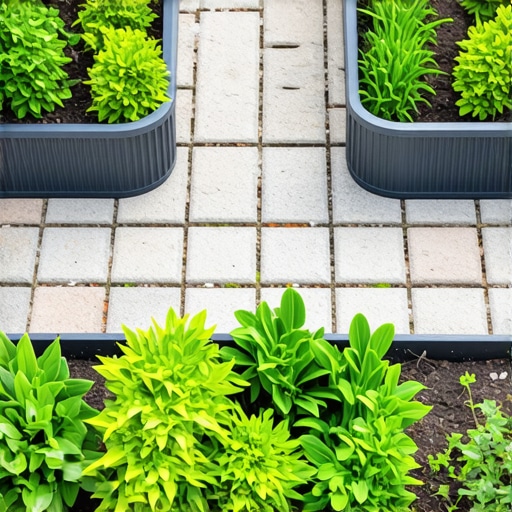
The Structural Engineering of a Garden Edge: Why Professionals Choose Steel
Professional landscape designers prioritize steel edging because it offers a permanent, rigid barrier that resists frost heave and mechanical damage, unlike plastic alternatives that warp, crack, and surface over time. Steel provides a thin, clean profile that effectively stops aggressive rhizomes while maintaining the structural integrity of the bed edge under soil pressure.
I recently got called out to tear up a $30,000 patio and garden suite that was sinking and spreading because the previous contractor tried to save $500 by using plastic ‘snake’ edging. It was a disaster. The plastic had heaved six inches out of the clay soil, allowing the gravel base to migrate and the sod to invade the planting beds. The homeowner was furious, and rightly so. This is what happens when you prioritize short-term material costs over engineering reality. Landscaping is not just about aesthetics; it is about managing forces—hydrostatic pressure, thermal expansion, and mechanical impact. Plastic is a toy; steel is a structural component.
Material Science: Why Polyethylene Fails in the Dirt
Plastic edging, typically made from high-density polyethylene (HDPE), has a thermal expansion coefficient that makes it a liability in any climate with temperature swings. When the sun hits that plastic, it expands. When it cools, it contracts. Since it is pinned into the ground with cheap plastic stakes, it has nowhere to go but up. This creates the ‘loopy’ look you see in amateur yards. It looks like a discarded garden hose emerging from the mulch. Furthermore, UV degradation is a silent killer. Within three seasons, most plastic edging becomes brittle. One hit from a string trimmer and it shatters. If you are doing a yard cleanup, you will spend more time avoiding the edging than actually cleaning the beds.
“The primary function of landscape edging is to provide a root barrier for stoloniferous grasses while maintaining a structural clean line that resists lateral soil pressure.” – National Association of Landscape Professionals Handbook
The Physics of Frost Heave and Lateral Pressure
In regions with freeze-thaw cycles, the soil is a living, moving thing. Moist soil expands when it freezes, exerting massive upward pressure. Steel edging, specifically 14-gauge or 12-gauge professional-grade material, is typically installed with 12-inch tapered steel stakes that lock the sections together. These stakes are driven deep into the sub-base, anchoring the edging against the vertical movement of the soil. Steel stays put. Plastic floats. When we do a sod install, we need a hard, unyielding edge to cut the turf against. Steel allows for a tight, vertical seam that keeps the grass exactly where it belongs.
How much does professional steel edging cost per foot?
While the initial cost of steel edging is approximately $4.00 to $6.50 per linear foot compared to $1.50 for plastic, the life-cycle cost is significantly lower because steel lasts 25+ years without replacement. When you factor in the labor of re-trenching and replacing failed plastic every four years, steel is the clear economic winner for any permanent landscaping project.
| Feature | 14-Gauge Steel Edging | HDPE Plastic Edging | Aluminum Edging |
|---|---|---|---|
| Life Expectancy | 25+ Years | 3-5 Years | 15-20 Years |
| UV Resistance | Total | Low to Moderate | Total |
| Frost Heave Resistance | Excellent | Poor | Moderate |
| Mower Protection | High (Trimmers bounce off) | Low (Trimmers cut it) | Moderate |
| Typical Gauge | 14ga or 12ga | N/A (Bulk plastic) | 1/8 inch |
Hydrostatic Pressure and Drainage Logic
One thing the ‘mow-and-blow’ hacks never tell you is how edging affects your irrigation efficiency. If your edging heaves and creates a lip, it traps water at the edge of your sod. This leads to fungal pathogens like Rhizoctonia solani (Brown Patch) because the roots are sitting in a saturated micro-environment. Steel edging sits flush with the soil grade, allowing surface water to sheet off the lawn and into the drainage zones of the bed. It doesn’t create a dam. It creates a boundary. We install our steel with a slight 1-degree tilt toward the bed to ensure that any heavy rainfall is directed away from the turf crown.
“Steel edging provides a rigid, permanent line that survives the mechanical stresses of string trimmers and mowers better than any composite or plastic alternative.” – Cornell University Horticulture Extension
The 14-Gauge Professional Installation Protocol
You can’t just throw steel in a trench and call it a day. It requires precision. We use a vertical edger or a sharp spade to cut a 5-inch deep pilot trench. This is critical. If you try to hammer steel into compacted clay, you will bend the top rail. We check for utility lines—always call 811—especially since irrigation lines often run parallel to bed edges. Once the trench is set, we overlap the joints by at least four inches to prevent ‘hinging.’ The stakes are then driven at a slight angle to create a ‘scissor’ lock with the soil. Don’t skip the corner pieces; manufactured 90-degree corners are the only way to ensure the edge doesn’t flare out over time.
Professional Edging Checklist
- Trench Depth: Minimum 5 inches for a 6-inch strip.
- Overlap: 4-6 inches at every joint to maintain a continuous line.
- Staking: One 12-inch steel stake every 3 feet minimum.
- Grade Check: The top of the steel should be no more than 1/2 inch above the soil.
- Safety: Use rolled-top steel to prevent cuts to pets or children.
Is steel edging safe for lawn mowers?
Yes, professional-grade steel edging is designed with a rolled top edge or a deburred flat top that is perfectly safe for lawn mower tires and blades. Because steel remains flush with the ground and does not ‘creep’ upward like plastic, the risk of a mower blade striking the edging is virtually zero when installed by a professional. It actually protects your bed from mower encroachment better than any other material.
Long-Term Maintenance and the Soil Interface
Once the steel is in, it requires zero maintenance. You can run a string trimmer right against it. The metal won’t scar. Over time, a natural patina (if using raw steel) or a subtle powder-coated finish (if using Cor-Ten or painted steel) will blend into the mulch line. This creates a visual ‘disappearing act’ where the focus remains on the plants, not the hardware. Cheap plastic always remains an eyesore. If you’re investing in high-quality landscaping, don’t ruin the finish with cheap boundaries. It will rot, it will heave, and you will regret it. Steel is the only way to go.