
The Blueprint Phase: Why Brush Clearing Starts with a Site Survey
Professional brush clearing requires a systematic approach using high-torque brush mowers, specialized carbide-tipped blades, and heavy-duty loppers to manage woody vegetation and invasive species. Successful reclamation depends on identifying the stem diameter of the overgrowth and selecting machinery that can handle the mechanical stress of high-resistance cutting without overheating the gearbox or dulling the edges prematurely.
I always drill into my new crew members: if you don’t fix the soil grading first, every plant you put in the ground is just expensive compost. This applies to clearing too. If you just whack away at the surface without understanding the root structures or the slope of the land, you are creating a drainage nightmare. I have seen guys take a skid steer to a hillside covered in honeysuckle, rip everything out, and then act surprised when the next heavy rain washes three inches of topsoil into the neighbor’s pool. Clearing is not just about removal; it is about preparing the canvas for the next stage of landscaping, whether that is a new sod install or an intricate irrigation system. We look at the site’s topography before we even sharpen a blade. We check for utility lines, hidden boulders, and the moisture content of the soil. Wet soil compacts under heavy machinery, which kills the aerobic bacteria needed for future plant life. We do it right, or we don’t do it at all.
“Effective brush management requires the integration of mechanical, chemical, and biological controls to prevent the rapid re-establishment of invasive woody species.” – Texas A&M AgriLife Extension
How much does it cost to clear an acre of brush?
The cost to clear an acre of brush typically ranges from $500 to $3,000 depending on vegetation density, terrain slope, and the tools required for the job. Factors like the presence of large rocks or the need for stump grinding significantly increase the labor hours and equipment wear-and-tear costs.
The Heavy Artillery: Mechanical Clearing Tools
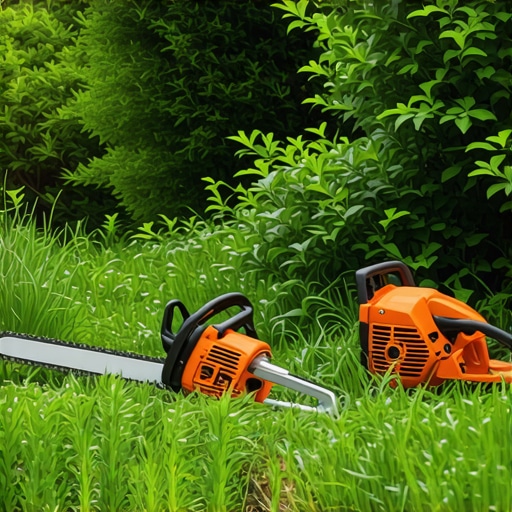
When you are staring down two acres of briars and saplings, a handheld trimmer is a joke. You need a walk-behind brush mower, often called a ‘brush hog.’ These machines are built with heavy-duty spindles and swinging blades that can mulch through saplings up to 3 inches in diameter. The physics here is simple: momentum and mass. A standard lawnmower blade will shatter if it hits a hidden stump. A brush mower blade is designed to pivot, absorbing the shock while the engine’s torque maintains the RPMs. [IMAGE_PLACEHOLDER]
| Tool Type | Max Stem Diameter | Application | Maintenance Need |
|---|---|---|---|
| Flail Mower | 1.5 Inches | Dense grass and light brush | Knife sharpening every 20 hours |
| Rotary Brush Cutter | 3.0 Inches | Woody saplings and thickets | Gearbox oil check weekly |
| Forestry Mulcher | 8.0 Inches | Large scale land clearing | Hydraulic fluid monitoring |
| Chainsaw (50cc+) | Unrestricted | Felling trees and large limbs | Chain tensioning hourly |
Don’t fall for the big-box store ‘all-purpose’ machines. They lack the deck thickness to withstand the debris. A professional deck is 10-gauge steel or thicker. If it’s thin, a piece of kicked-up rock will put a hole right through it. We use machines with hydrostatic transmissions because they allow for infinite speed control without clutching. This is vital when you are navigating tight spaces near a new irrigation line or a delicate hardscape edge.
What is the best month to clear overgrown land?
The best time to clear overgrown land is during the late fall or early winter when vegetation is dormant and the ground is firm or frozen. Clearing during dormancy prevents the spread of certain fungal diseases and makes it easier to identify the underlying terrain without the obstruction of thick foliage.
Handheld Power Tools and Blade Metallurgy
For the areas where the big machines can’t reach, we move to high-displacement string trimmers fitted with brush blades. But here is the secret: most people use the wrong blade. A 4-tooth blade is for tall grass and reeds. For woody brush, you need a 22-tooth or 40-tooth carbide-tipped circular saw blade. This isn’t just about cutting faster; it’s about safety. A blade with more teeth reduces the chance of ‘kickback’ when you hit a hard stem. Kickback happens when the blade’s rotation is suddenly halted, transferring all that energy into the operator’s arms. It’s dangerous. It’s avoidable. Use the right tool for the diameter of the wood.
“Safety in brush clearing operations is paramount; operators must maintain a ‘danger zone’ of at least 50 feet due to the high velocity of discharged debris from rotary cutters.” – OSHA Technical Manual
We also look at the fuel. We don’t use 87-octane pump gas with 10% ethanol. Ethanol attracts moisture and gums up the carburetors of high-performance two-stroke engines. We run 92-octane ethanol-free fuel mixed with synthetic oil. It keeps the exhaust ports clean and the engine running cool even in 95-degree heat. If the tool fails in the middle of a yard cleanup, the project timeline slides, and profit evaporates. Precision maintenance is the only way to ensure reliability.
The Manual Arsenal: Loppers and Billhooks
Sometimes, the best tool has no engine. A pair of professional-grade bypass loppers with geared handles can provide up to 3x the cutting power of standard tools. We use these for precision thinning within a landscape. You don’t want to take a power saw to a vine wrapped around a desirable oak tree. You’ll nick the bark and invite Boring Beetles or Oak Wilt. You use manual tools to clear the sensitive areas. A well-sharpened billhook is another favorite. It’s an ancient tool for a reason. The hooked end allows you to pull vines away from the ground before you slice them, protecting your blade from the dirt. Dirt is the enemy of sharpness. A blade that hits the soil is a blade that needs a file.
Post-Clearance: From Chaos to a Finished Yard
Once the brush is gone, the real work starts. This is where the ‘mow-and-blow’ hacks disappear, and the real contractors stay. You are left with a scarred landscape that needs immediate stabilization. If the plan is a sod install, we don’t just throw the grass down. We test the soil pH. Most overgrown areas are acidic due to decaying organic matter. We might need to add lime to bring the pH back to a 6.5 or 7.0 range. We then use a power rake to remove the remaining thatch and level the soil. This is where your grading expertise pays off. You want a 2% slope away from any structures to prevent hydrostatic pressure from building up behind retaining walls or under foundations.
Post-Clearing Maintenance Checklist
- Stump Treatment: Apply a systemic herbicide to fresh-cut stumps of invasive species like Buckthorn or Privet to prevent re-sprouting.
- Soil Testing: Pull core samples from at least five locations in the cleared area to determine nutrient deficiencies.
- Erosion Control: Install straw wattles or silt fencing if the cleared area has a slope greater than 10%.
- Debris Management: Chip the woody debris to use as mulch or haul it off-site to prevent nitrogen tie-up in the soil.
- Irrigation Audit: Check for damaged sprinkler heads that may have been hidden under the brush before starting any new planting.
The goal is a seamless transition from a tangled mess to a managed environment. It takes sweat, engineering knowledge, and the right steel. Don’t cut corners on the tools, and don’t ignore the soil biology. Your yard will thank you in three years when the sod is deep-rooted and the drainage is perfect. It’s a science. Treat it like one.