
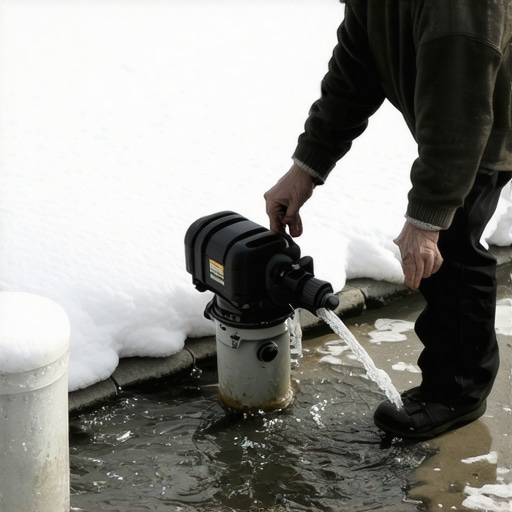
What is the Submersion Rule for Pond Pumps in 2026?
The submersion rule for 2026 pond maintenance dictates that any asynchronous or mag-drive pump removed for the winter must be stored in a bucket of water in a frost-free environment to prevent seal dry-rot and internal gasket shrinkage. This protocol ensures that mechanical seals remain hydrated and pliable, preventing immediate failure when the system is restarted during spring landscaping cycles.
The Apprentice Lesson: Why Frozen Seals Cost $800
I always drill into my new crew members: if you don’t fix the soil grading first, every plant you put in the ground is just expensive compost. The same logic applies to water features. Last season, I had a fresh hire pull a $1,200 commercial-grade pump from a client’s koi pond in late November. He did everything right on the yard cleanup—cleared the debris, purged the irrigation lines, even helped with a late-season sod install. But he left the pump on a shelf in an unheated shed. By March, the internal O-rings had shriveled by less than a millimeter. That tiny gap allowed water to hit the motor housing. It didn’t just stop working; it tripped the breaker and fried the control board. It was an $800 mistake that could have been avoided with a five-gallon bucket and a gallon of tap water. Don’t be that guy. If you pull it, submerge it. It is that simple. This isn’t about being tidy; it is about the physics of elastomers and the ruthless nature of winter temperatures on mechanical tolerances.
“A pump seal is a precision-engineered barrier; when air replaces water as the medium, the lack of hydrostatic pressure allows the material to lose its structural memory.” – Fluid Dynamics Manual for Residential Water Features
The Mechanics of Winter Water: Why Ice Wins Every Time
Ponds are not static environments. As we approach 2026, we are seeing more volatile freeze-thaw cycles that wreak havoc on standard landscaping installs. When water freezes, it expands by approximately 9%. This expansion generates thousands of PSI. If your pump is sitting in four inches of water and that water turns to a solid block, the housing will crack. Most homeowners think they can just leave the pump at the bottom of the pond. If your pond is at least 36 inches deep, you might get away with it in moderate climates because the water at the bottom stays around 39 degrees Fahrenheit (the point of maximum density for water). However, if you are in a zone where the frost line penetrates deep, that pump is a sitting duck. We look at the irrigation systems first; if the ground is freezing deep enough to threaten those lines, your pump is in the kill zone. We use 18-inch probes to check soil temperature before we make the call to pull or leave.
The 2026 Pump Storage Decision Matrix
Choosing whether to leave your gear in the pond or pull it for the season depends on your specific hardware and the local climate. Use this table to determine your strategy.
| Pump Type | Action Required | Storage Method | Risk Level | |
|---|---|---|---|---|
| Mag-Drive | Pull if pond < 24″ deep | Bucket of Water / Frost-Free | Medium | |
| Asynchronous | Pull Always | Submersion Rule | High | |
| Submersible Solids-Handling | Leave if > 36″ deep | N/A | Low | |
| External/Centrifugal | Drain & Disconnect | Dry / Heated Space | Critical |
How deep should a pond pump be to avoid freezing?
To avoid freezing, a pond pump must be positioned at least 12 inches below the maximum frost depth for your specific geographic region, typically requiring a total depth of 30 to 36 inches in temperate zones. In 2026, we recommend placing the unit on a raised pump vault or a set of concrete pavers at the bottom to keep it clear of the muck layer while maintaining thermal protection from the surrounding water volume.
Can I leave my pump in the pond if I use a de-icer?
Yes, but with caveats. A de-icer or pond heater isn’t designed to heat the whole pond; it is designed to keep a hole open in the ice for gas exchange. If you keep the pump running, you risk super-cooling the water. This happens when the pump pulls water from the relatively warm bottom and pushes it through the freezing air at the surface. You will kill your fish faster than the ice will. If you leave the pump in, turn it off. If you turn it off and the pond is shallow, you must pull it. No exceptions. This is the core of professional landscaping and pond management. We aren’t just moving water; we are managing a life-support system. During a yard cleanup, we often find that homeowners have left their irrigation timers on while the pond is freezing. This is a recipe for a flooded yard and a dead pond.
The Submersion Protocol: A Step-by-Step Checklist
If you have determined that the pump needs to come out, follow this exact sequence. Deviation leads to hardware failure.
- Disconnect Power: Do not just flip a switch. Unplug the unit and cap the outlet with a weather-proof cover.
- Purge the Lines: This is where irrigation knowledge overlaps. Use a shop vac or compressed air to blow out the plumbing lines connected to the waterfall or fountain. Water left in a PVC pipe will split it wide open.
- Clean the Intake: Scrub the pre-filter and the impeller housing. Use a 50/50 white vinegar and water solution to dissolve calcium deposits.
- The Bucket Test: Fill a heavy-duty plastic bucket with water. Place the pump inside, ensuring the entire motor housing is covered.
- Store Above 40 Degrees: A basement or a heated garage is ideal. Do not let the bucket freeze.
“Failure to maintain seal hydration during dormant periods is the leading cause of premature motor burnout in residential water features.” – International Association of Pump Manufacturers (IAPM)
The Relationship Between Sod, Grading, and Pond Health
Your landscaping doesn’t exist in a vacuum. When we perform a sod install near a water feature, we have to account for the nitrogen runoff. During winterizing, this is critical. Any yard cleanup must involve removing dead organic matter from the pond perimeter. If you don’t, that debris will blow into the pond, sink, and decompose. Decomposition releases methane and hydrogen sulfide. If the pond freezes over, those gases are trapped. This is why we insist on a 5-foot ‘clean zone’ around the pond edge. We often use landscaping fabric and decorative river rock to create a buffer between the grass and the water. It prevents the irrigation system from over-saturating the pond margins and protects the pump from sucking up grass clippings that can clog the impeller during the final autumn runs.
Spring 2026: Re-entry and Seal Integrity
When the ground thaws and you are ready to start your landscaping for the new season, don’t just throw the pump back in. Check the water in the bucket. Is it oily? If so, your seals have already failed, and the cooling oil is leaking. Better to find out in the bucket than in the pond with your fish. Inspect the cord for any signs of cracking or ‘brittleness’ caused by cold exposure. If the pump passes the visual and ‘bucket smell’ test, reinstall it, but monitor it for the first 48 hours. Look for reduced flow rates or humming sounds. These are signs of cavitation or a stuck impeller. If you followed the submersion rule, the seals should be as tight as the day they were manufactured. Maintenance isn’t a chore; it’s an investment in the longevity of your outdoor environment. Don’t skip the details. The dirt never lies.