
Permeable Paver 2026 Install: Choosing the Base
The Foundation of Permeability: Why Your Base Dictates Longevity
To choose the right permeable paver base, you must select open-graded aggregates like #57 stone for the sub-base and #8 stone for the bedding layer, ensuring stormwater infiltration and structural stability without the use of sand or fines that clog drainage. I recently got called out to tear up a $30,000 patio that was sinking because the previous contractor used a standard dense-graded modified gravel base under a permeable surface. Within two seasons, the fines in that modified gravel washed into the subgrade, creating massive voids that swallowed the pavers whole. It was a $30k autopsy that could have been avoided with three inches of clean #8 stone. If you don’t understand the engineering of void spaces, you aren’t a hardscaper; you are a liability. A permeable system is a living hydraulic machine. It requires specific stone sizes that lock together while leaving 30 percent to 40 percent of the volume open for water storage. This isn’t just about aesthetics. It is about civil engineering on a residential scale.
“A permeable pavement system’s performance is inextricably linked to the infiltration rate of the subgrade and the reservoir capacity of the aggregate base.” – ICPI Tech Spec 18
The Science of Open-Graded Aggregates
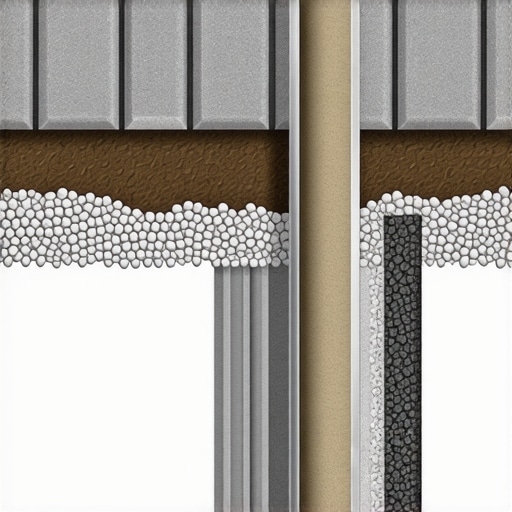
Selecting the correct aggregate for a 2026 install requires a deep dive into ASTM D448 standards. Unlike traditional patios that use 2A modified stone (which contains dust or “fines”), permeable bases rely on washed, angular stone. Angularity is the key to structural interlock. If you use rounded river rock, your patio will shift like a bowl of marbles. You need crushed granite or limestone with fractured faces. The sub-base typically consists of #2 stone, which provides the massive reservoir capacity needed to handle a 100-year storm event. Above that, you layer #57 stone as a transition, followed by a 2-inch bedding layer of #8 or #9 stone. This tiered approach prevents the smaller bedding stones from migrating down into the larger reservoir voids. It is a filtration system that doubles as a structural foundation. We measure the success of this install by the California Bearing Ratio (CBR) of the soil and the infiltration rate of the finished system. If the water doesn’t disappear instantly during a downpour, you failed.
How much modified gravel do I need for a patio base?
For a standard permeable patio, you do not use modified gravel at all; instead, you require approximately 6 to 8 inches of #57 open-graded stone for the base and 2 inches of #8 bedding stone, totaling 8 to 10 inches of depth for pedestrian applications. Heavy clay soils may require a 12-inch sub-base of #2 stone to increase reservoir capacity. Do not let a contractor talk you into “crushed run” or “quarry process.” Those materials contain fines that will seal the bottom of your excavation, turning your patio into a bathtub. Once the water is trapped, the freeze-thaw cycle will heave those pavers like a tectonic plate. In 2026, we are seeing more municipalities mandate these specs to reduce runoff into local sewers. Check your local codes. Many HOAs now require a specific PSI rating for the subgrade compaction before the first stone even hits the dirt.
The Critical Role of Geotextiles
The biggest mistake I see in the field is the misuse of fabric. In a permeable install, you must use a non-woven geotextile with a high flow rate. The fabric acts as a separator between the native soil and your clean stone base. Without it, the dirt eventually migrates upward, clogging the stone and destroying the permeability. However, you cannot use a cheap weed barrier from a big-box store. Those fabrics have a low permittivity. You need an industrial-grade material that allows at least 50 gallons per minute per square foot. If the fabric can’t breathe, the system won’t drain. I tell my crew: if you can’t see through the weave when you hold it up to the sun, don’t put it in the hole. We also utilize edge restraints that are mechanically anchored. Traditional plastic edging often fails because it doesn’t have the weight of the dense-graded base to hold it down. We prefer concrete curbs or heavy-duty aluminum restraints pinned with 12-inch galvanized spikes. It won’t move. Period.
| Material Type | ASTM Size | Primary Function | Void Space % |
|---|---|---|---|
| Sub-Base | #2 Crushed Stone | Structural Reservoir | 40% |
| Base Layer | #57 Crushed Stone | Transition / Leveling | 35% |
| Bedding Layer | #8 or #9 Stone | Setting Surface | 30% |
| Joint Filler | #8 or #9 Stone | Locking / Drainage | 30% |
What is the best base for permeable pavers?
The best base for permeable pavers is a three-tier system consisting of a #2 stone sub-base for water storage, a #57 stone base for stability, and a #8 stone bedding layer for the final paver placement. This open-graded aggregate system ensures maximum stormwater management and prevents pavers from shifting over time. Avoid using sand or polymeric sand in the joints of a permeable system. You must use the same #8 or #9 stone used in the bedding layer for the joints. If you put sand in there, you have just built a regular patio that will clog within six months. The joint aggregate must be clean and washed. Dust is the enemy of permeability. We use a plate compactor with a protective mat to set the pavers into the #8 stone. The vibration forces the small chips into the joints, creating a mechanical lock. It is physics, not magic.
“A retaining wall doesn’t fail because of the stone; it fails because of the water trapped behind it.” – Hardscape Engineering Axiom
Permeable Installation Checklist
- Call 811 to mark all underground utilities before excavation.
- Excavate to a depth of at least 12 inches for pedestrian traffic.
- Verify subgrade soil is not overly saturated; if it is, wait for it to dry.
- Install non-woven geotextile fabric with at least 12 inches of overlap at seams.
- Compact the #2 sub-base in 4-inch lifts using a 5,000 lbf plate compactor.
- Ensure the final grade slopes away from any residential foundations at a 2 percent minimum.
- Use a laser level to verify the #57 base layer is perfectly flat before adding bedding stone.
- Install edge restraints before the bedding layer to prevent lateral shifting.
Maintenance: The Year-One Reality
After the install, the first year is critical. As the stone chips in the joints settle, you may need to sweep in a bit more #8 stone to keep the joints full. This is normal. What isn’t normal is allowing organic debris like leaves or grass clippings to rot on the surface. That organic matter turns into compost, which fills the voids and allows weeds to take root. A permeable patio is a low-maintenance system, but it is not a zero-maintenance system. Once a year, hit it with a leaf blower or a vacuum specifically designed for permeable surfaces. If you see water pooling, it means your joints are clogged. Don’t panic. You can usually clear it by power washing the top half-inch of stone out of the joints and replacing it with fresh, clean chips. Treat your base like the lungs of your property. Keep them clear, and the system will last 30 years. Neglect them, and you are just looking at an expensive pile of rocks.