
The Chemical Autopsy of a Yellowing Lawn
To fix dog urine spots permanently, you must neutralize concentrated nitrogen and salts by flushing the root zone with 1 inch of water immediately after contact and applying gypsum to displace sodium. This process stops the osmotic dehydration of the grass blades and restores the soil pH to a functional 6.5 to 7.0 range.
I have seen it a thousand times. A homeowner calls me out for a yard cleanup because their turf looks like a moth-eaten rug. Last month, I walked onto a property where the owner had tried to ‘fix’ dog spots by dumping high-nitrogen fertilizer on the entire lawn, thinking it was just hungry. They didn’t just have spots anymore; they had a chemical nightmare. They literally torched 4,000 square feet of Fescue because they didn’t understand the chemistry of urea. The grass didn’t need more food; it was already suffering from a nitrogen overdose. They turned a $200 repair into a $5,000 sod install because they ignored the science of soil burn. Nitrogen is a salt. When a dog urinates, it is essentially applying a massive, concentrated dose of liquid fertilizer to a four-inch circle. In small doses, nitrogen is great. In this concentration, it creates a ‘salt index’ so high that it sucks the moisture right out of the roots through osmosis. The roots don’t just dry out; they desiccate at a cellular level.
“Urea, the primary nitrogen-containing component in dog urine, is converted by soil microbes into ammonia and then nitrates, which at high concentrations causes direct chemical leaf burn and root dehydration.” – Agronomy Manual of Turfgrass Management
The Forensic Breakdown: Why the Grass Dies
It is not just about the nitrogen. We are dealing with pH spikes and soluble salts. Dog urine is often alkaline, and as it breaks down, it swings the soil chemistry far outside the comfort zone of cool-season grasses. The brown center of the spot is the ‘kill zone’ where the concentration was highest. The dark green ring around the edge? That is where the nitrogen was diluted enough to actually act as a fertilizer. If your lawn is covered in these green rings with brown centers, your soil is screaming for a balance. Stop buying ‘miracle’ repair kits from big-box stores. They are mostly mulch and cheap seed. You need to fix the dirt.
How do I stop dog urine from killing my grass immediately?
The immediate solution is dilution. You need to apply at least three times the volume of water as the volume of urine produced. If you have a 60-pound dog, you need a gallon of water on that spot within minutes. This pushes the solutes past the root zone (leaching) and prevents the salt from binding to soil particles. It’s simple civil engineering: move the contaminant out of the sensitive area. If you miss the window and the spot turns yellow, you are no longer in prevention mode; you are in remediation.
| Material | Function | Application Rate |
|---|---|---|
| Gypsum (Calcium Sulfate) | Displaces salts/improves drainage | 5 lbs per 100 sq ft |
| Humic Acid | Increases cation exchange capacity | 2 oz per 1,000 sq ft |
| Fine Fescue/Rye Seed | Rapid germination for repair | 5-8 seeds per sq inch |
| Screened Compost | Introduces beneficial microbes | 1/4 inch topdress |
The Step-by-Step Remediation Process
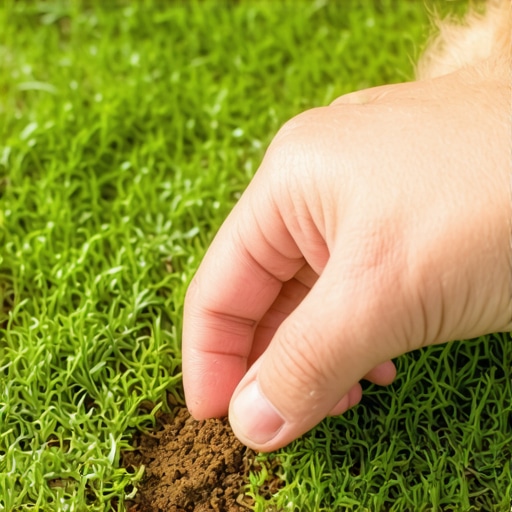
If the grass is dead, it is dead. Don’t pray for a resurrection. You need to excavate. First, take a hand trowel and remove the dead organic matter. Thatch buildup traps the salts. Scrape it down to the bare soil. Second, use a hand aerator to punch holes 3 to 4 inches deep. This breaks the surface tension. Third, apply a handful of pelletized gypsum. This is critical. The calcium in gypsum replaces the sodium from the urine on the soil colloids, allowing the salt to wash away more easily during irrigation. Fourth, top with a 1/2 inch of high-quality screened topsoil—not the bagged junk that’s half wood chips. Fifth, seed it. If the damage is widespread, you are looking at a full sod install. When we do a sod install for dog owners, we often recommend a 90/10 Tall Fescue/Kentucky Bluegrass blend for its resilience and deep rooting potential.
“Managing soil salinity requires the displacement of sodium ions with calcium, followed by leaching through the soil profile via controlled irrigation or rainfall.” – Penn State Agricultural Extension
How much water is needed to flush dog urine?
To effectively flush the nitrogen and salts from a single dog urine event, you must apply one to two gallons of water to the specific area. This volume ensures the nitrogen moves 6 to 8 inches deep into the soil, which is below the primary root mass of most residential turfgrasses. Shallow watering only spreads the salt horizontally, potentially increasing the size of the burn spot. Deep percolation is the goal.
The Irrigation Factor
Your irrigation system needs to be dialed in. Most homeowners underwater their lawns, doing 10 minutes every day. That is garbage. It creates shallow roots that are more susceptible to urine burn. You want deep, infrequent cycles. One inch of water per week, delivered in two 45-minute sessions. This forces the roots to grow deep into the subsoil, where they are protected from the surface-level chemical fluctuations of pet waste. Check your spray patterns. If you have dry spots, the salts will concentrate there and kill the grass faster. Use a catch-can test to ensure uniformity. If your head-to-head coverage is off, your landscaping will fail.
Long-Term Yard Cleanup and Maintenance
- Core Aeration: Do this twice a year to prevent compaction and allow gas exchange.
- Wetting Agents: Use a professional-grade surfactant to help water penetrate hydrophobic soil.
- High-Mowing: Keep your deck at 3.5 to 4 inches. Taller grass has deeper roots and masks minor spotting.
- Soil Testing: Get a professional lab analysis. You can’t manage what you don’t measure.
Stop looking for a magic pill to feed your dog. Changing their internal pH can lead to kidney stones. Fix the lawn, not the animal. Landscaping is a game of chemistry and physics. If you maintain the soil biology and keep the drainage open, the lawn can handle the nitrogen load. If you let the soil get compacted and the pH get wonky, every piddle becomes a poison. It’s that simple. Do the work or pay for the sod.