
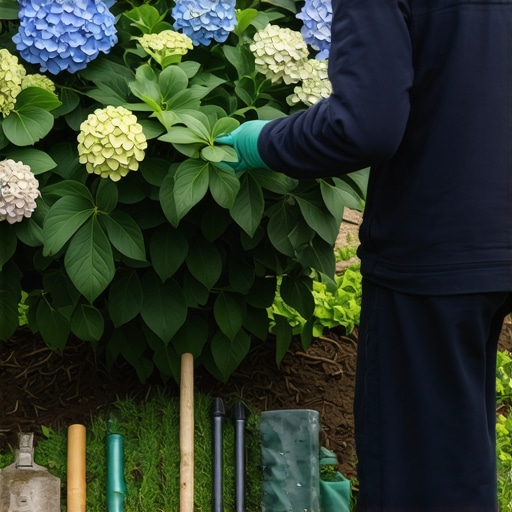
Pruning 2026 Hydrangeas: When to Cut for Big Blooms
A hydrangea is not a decorative ornament; it is a biological machine with a strict internal clock. Most homeowners and ‘mow-and-blow’ hacks approach these shrubs with zero understanding of bud set or metabolic cycles, resulting in sticks that never flower. To ensure a massive display in 2026, you have to look past the current season. You are pruning for the future architecture of the plant. If you wait until you see the ‘dead’ wood in the spring to make your move, you have likely already cut off next year’s primary bloom sites. Real landscaping is about timing the plant’s natural growth hormones, not just cleaning up the yard when you feel like it.
The Biological Clock of Hydrangea Macrophylla and Paniculata
To prune hydrangeas successfully for 2026, you must identify if your variety sets buds on old wood (previous season) or new wood (current season) to avoid removing embryonic flowers. Varieties like Hydrangea macrophylla set their 2026 buds in late summer of 2025, requiring pruning immediately after the current bloom fades.
I always drill into my new crew members: if you don’t fix the soil grading first, every plant you put in the ground is just expensive compost. I remember a job in North Carolina where a client wanted a full sod install and a row of ‘Endless Summer’ hydrangeas. The previous contractor had buried the root flares 4 inches deep in heavy clay. The plants were literally suffocating. We had to excavate, fix the hydrostatic drainage issues, and teach them that pruning isn’t a cosmetic choice—it’s a physiological necessity. If the roots can’t breathe because of poor landscaping fundamentals, the plant won’t have the carbohydrate reserves to push out those massive 2026 blooms no matter how perfectly you snip the stems.
“Hydrangea macrophylla requires a specific window for pruning because flower buds are initiated during long days in mid-to-late summer and must survive the winter to bloom the following year.” — University of Tennessee Agricultural Extension
How do I know if my hydrangea blooms on old or new wood?
Identify the species first. If it has blue or pink ‘mophead’ flowers, it is almost certainly a macrophylla, which blooms on old wood. These need to be pruned by late July or August. If it has cone-shaped white flowers that turn lime or pink, it’s likely a paniculata, which blooms on new wood and can be cut in late winter or early spring without losing the 2026 show.
The Engineering of the Cut: Pruning for 2026 Blooms
Precision matters. You don’t just hack at the branches. You need to identify the terminal bud and the lateral buds. A proper cut should be made exactly 1/4 inch above a healthy node at a 45-degree angle. This angle prevents water from sitting on the cut surface, which leads to fungal pathogens and rot. When we perform a yard cleanup, we use sterilized bypass pruners—never anvil pruners, which crush the vascular tissue (xylem and phloem), preventing the flow of nutrients needed for next year’s growth.
[IMAGE_PLACEHOLDER]
Hydrangea Pruning Schedule and Variety Guide
The following table breaks down the technical requirements for the most common varieties to ensure you don’t accidentally sterilize your garden for the 2026 season.
| Hydrangea Type | Blooming Wood | Optimal Pruning Window | Pruning Intensity |
|---|---|---|---|
| Bigleaf (Macrophylla) | Old Wood | Immediately after summer bloom | Light thinning only |
| Oakleaf (Quercifolia) | Old Wood | Late summer (post-bloom) | Minimal; remove dead wood |
| Panicle (Paniculata) | New Wood | Late winter / Early spring | Can be cut back 1/3 to 1/2 |
| Smooth (Arborescens) | New Wood | Late winter | Can be cut to the ground |
How far back can I prune my hydrangeas without killing them?
For varieties that bloom on new wood, like ‘Annabelle’ or ‘Limelight,’ you can take them down to 12 inches from the ground in late winter. However, for old-wood bloomers, never remove more than 1/3 of the living wood in a single year. Removing more triggers a massive vegetative response at the expense of reproductive (flower) growth. It’s about hormonal balance.
Soil Chemistry and Hydration: Beyond the Pruning Cut
Pruning is only half the battle. If your irrigation system is hitting the leaves rather than the root zone, you are inviting powdery mildew and cercospora leaf spot, which will weaken the plant’s ability to store energy for 2026. High-end landscaping requires drip irrigation. Furthermore, the pH of your soil dictates the availability of aluminum ions, which changes the flower color. A pH of 5.2 to 5.5 gives you blue; 6.0 and above gives you pink. If you are planning a sod install nearby, be careful with the lime used for the turf; it will leach into the hydrangea beds and flip your blue flowers to a muddy pink overnight.
“The primary cause of failure in woody ornamentals is not the climate, but the mechanical compaction of soil and the subsequent failure of the root system to facilitate gas exchange.” — International Society of Arboriculture (ISA)
- Check Soil pH: Use a digital tester, not a cheap color-strip kit.
- Sanitize Tools: Use 70% isopropyl alcohol between every shrub.
- Mulch Correctly: 2-3 inches of organic compost. No mulch volcanoes.
- Irrigation Check: Ensure 1 inch of water per week delivered to the soil.
Don’t fall for the ‘one-size-fits-all’ maintenance packages. During a yard cleanup, most crews will ’round off’ your hydrangeas with hedge shears. Stop them. This destroys the structural integrity of the plant and removes the 2026 buds. If they don’t know the difference between a terminal bud and a leaf scar, keep them away from your shrubs. Your 2026 garden depends on the biological integrity of the stems you leave behind today. It’s science, not art.