
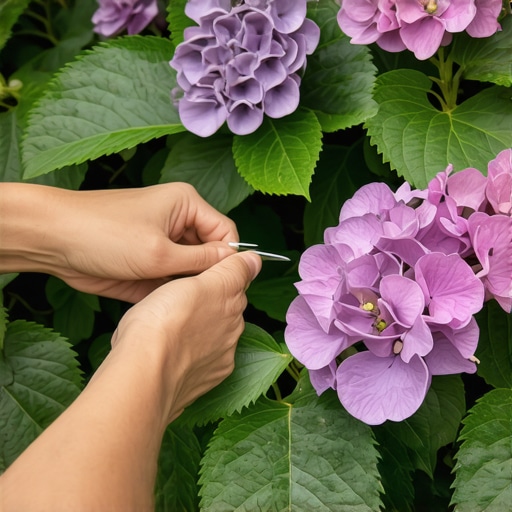
Why Panicle Hydrangea Success Starts in Late Winter Planning
To ensure massive blooms on panicle hydrangeas (Hydrangea paniculata) by 2026, you must prune in late winter or early spring before new growth emerges, as these shrubs bloom on new wood. Strategic cuts redirect apical dominance to primary nodes, resulting in 12-inch flower heads and sturdy stems that won’t flop under hydrostatic pressure from heavy rain.
I always drill into my new crew members: if you don’t fix the soil grading first, every plant you put in the ground is just expensive compost. It is the same with pruning. If you haven’t addressed the underlying root health and soil structure through proper yard cleanup and irrigation management, no amount of precise cutting will save a specimen from mediocre performance. I have spent 20 years watching ‘mow-and-blow’ contractors hack away at the crown of a Hydrangea paniculata with gas hedge trimmers, effectively destroying the plant’s ability to generate structural integrity. We don’t do that. We use bypass pruners, and we look at the nodes. Every cut is a calculated decision in civil engineering for plants.
The Science of Node Selection and Stem Strength
Pruning panicle hydrangeas is not about aesthetics; it is about managing the plant’s hormonal distribution. When we talk about 2026 blooms, we are talking about building a frame that can support the weight of a water-heavy inflorescence. Panicle hydrangeas can easily carry blooms that weigh two pounds after a rainstorm. If the base wood is weak, the plant collapses. This is why sod install and landscaping around the base of the plant must never interfere with the root flare.
“Pruning panicle hydrangeas to a permanent framework of three to five main stems provides the structural support needed for the heavy, terminal flower clusters produced on current-season growth.” – Penn State Extension: Woody Ornamentals Manual
How far back should I cut panicle hydrangeas?
For maximum flower size, you must cut the plant back to two or three buds from the base of the previous year’s growth. This focuses all the plant’s nitrogen and stored carbohydrates into fewer, more powerful shoots. If you want a larger shrub with more (but smaller) flowers, prune less aggressively, leaving four to six nodes. Use 1/4 inch cuts above the bud. Angle the cut to shed water away from the bud. Simple biology prevents rot.
| Pruning Intensity | Flower Size (Inches) | Stem Strength | Growth Rate |
|---|---|---|---|
| Hard Prune (2 Nodes) | 10-14″ | Very High | Rapid |
| Moderate (4 Nodes) | 6-9″ | High | Steady |
| Light (Tip Pruning) | 3-5″ | Low/Flopping | Slow |
Addressing the Root Zone: Irrigation and Soil Physics
You cannot talk about pruning without talking about the fuel source. While the internet tells you to water every day, turf grass and hydrangeas actually need deep, infrequent watering—exactly 1 inch per week—to force roots to chase the water down. This is why a professional irrigation setup is non-negotiable for 2026 success. If your soil is heavy clay, we need to talk about percolation. If water sits at the root zone, the plant’s vascular system shuts down, and your pruning won’t matter. It will rot.
- Tool Check: Sanitize your bypass pruners with 70% isopropyl alcohol between plants to prevent the spread of Cercospora leaf spot.
- Structural Pruning: Remove any ‘crossing’ branches that rub against each other. Friction creates wounds. Wounds invite borers.
- Thinning: Remove the ‘pencilly’ growth. If a stem is thinner than a standard pencil, it cannot support a 2026 bloom. Cut it to the ground.
- Clean-up: Remove all fallen debris from the base. This is part of a yard cleanup that prevents overwintering fungal spores from splashing back onto new foliage.
When is the best time to prune Hydrangea paniculata?
The operational window is after the hardest freeze of winter has passed but before the buds begin to swell. In most zones, this is late February or March. If you see green leaves, you’re late. You’ve already wasted the plant’s energy. Landscaping schedules must be rigid here. We aim for the dormant phase to minimize sap loss and stress.
“Failure to maintain the internal airflow of a large hydrangea specimen leads to micro-climates of high humidity, which are the primary drivers of powdery mildew outbreaks in urban landscapes.” – International Society of Arboriculture (ISA) Standards
The 2026 Bloom Maintenance Checklist
Achieving the ‘magazine look’ requires a 12-month commitment to the biology of the yard. After pruning, we apply a slow-release, sulfur-coated urea fertilizer if soil tests indicate a nitrogen deficiency. Don’t just dump 10-10-10. It’s lazy. Measure the pH. Panicle hydrangeas aren’t as pH-sensitive for color as Macrophylla, but they need a 5.8 to 6.2 range for optimal nutrient uptake. Keep sod install at least 18 inches away from the trunk. Grass is a competitor. It wins the nitrogen war every time. Use wood chip mulch instead. It breaks down and feeds the soil microbiology. Don’t skip this.