
Why New Sod Fails: The Engineering of Desiccation
To stop new sod from drying out, you must eliminate the air gaps between the grass rolls and the soil by utilizing the ‘overlap edge’ technique and immediate compaction rolling. This strategy addresses the primary engineering failure in turf installation: the rapid loss of moisture at the seams, which leads to root desiccation and localized turf death within the first 48 hours of installation. Most contractors lay sod like they are tiling a bathroom, but sod is a living, breathing biological system that shrinks the moment it leaves the farm.
The Apprentice Lesson: Soil Grading is Non-Negotiable
I always drill into my new crew members: if you don’t fix the soil grading first, every plant you put in the ground is just expensive compost. Last July, I walked onto a job site where a homeowner had spent four grand on high-quality fescue sod only to watch it turn into straw. They didn’t do a proper yard cleanup. They laid the sod over old thatch and uneven clay. The roots were suspended in air pockets. I made my lead apprentice stand there and watch as we ripped it all up. We spent the next day grading the site with a Harley rake to ensure a consistent, crumbly seedbed. You cannot cheat the dirt. If the soil is not level and clear of debris, your irrigation will pool in some areas and bypass others, leaving your sod edges to bake in the sun. The root system of a sod roll is incredibly vulnerable; it has been severed from its deep moisture source and depends entirely on the hydraulic bridge you create between the roll and the native soil.
“Soil moisture must be maintained at a level where the root zone is consistently damp but not anaerobic to facilitate rapid root initiation and prevent the permanent wilting point from being reached.” – Penn State Center for Turfgrass Science
The Overlap Edge Secret: Combatting Sod Shrinkage
Most DIY guides tell you to butt the edges of sod together. That is bad advice. When sod dries slightly, it shrinks. If you butt the edges perfectly during install, by the next morning, you will have half-inch gaps between every row. These gaps expose the edges of the root mat to the air, causing them to dry out and die. The ‘Overlap Edge Secret’ involves overlapping the edges by about half an inch and then ‘tucking’ them down into the soil. This creates a tight, compressed seam. When the sod inevitably tries to shrink, it simply tightens the seam instead of opening a gap. This protects the delicate rhizomes and ensures that the water you apply stays in the root zone rather than evaporating through the cracks. It takes 20% more time, but it saves 100% of the grass.
The Pre-Installation Yard Cleanup Checklist
You cannot install sod on a battlefield. A proper yard cleanup is the first step in a successful landscaping project. Use this checklist before the pallet arrives:
- Remove all existing vegetation using a non-residual herbicide or a sod cutter set to 2 inches.
- Clear all rocks larger than a golf ball to prevent air pockets.
- Test the soil pH; most turfgrass prefers a level between 6.0 and 7.0.
- Apply a high-phosphorus starter fertilizer to encourage immediate root branching.
- Ensure the grade slopes away from the house at a minimum of 2 percent.
Irrigation Logistics: Inches, Not Minutes
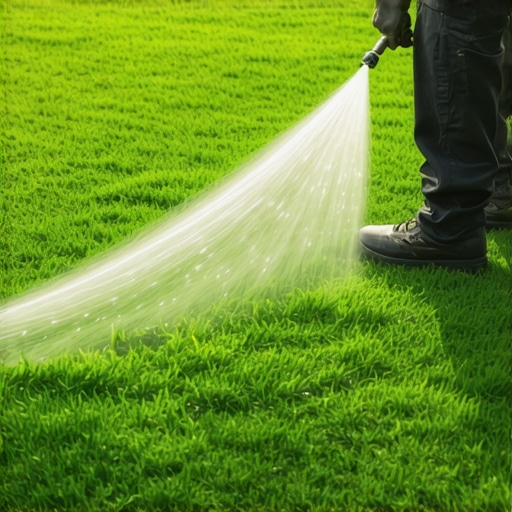
Stop measuring your irrigation in minutes. Your sprinklers are not a kitchen timer. You need to measure in inches of water delivered to the soil profile. New sod needs the top 4 inches of soil to be consistently moist. In the first week, this usually means 1/4 inch of water, twice a day. If you see the edges turning blue-gray, you are already too late; the plant is in a state of defense. Use a tuna can or a rain gauge to verify exactly how much water your system is putting out. This is where most people fail. They set a timer for 15 minutes and assume it is enough. If your soil is heavy clay, that water might just be running off. If it is sand, it is draining past the roots before they can drink. You have to understand your site’s infiltration rate.
How often should I water new sod in the first week?
New sod requires irrigation twice daily, ideally in the early morning and late afternoon, to keep the root mat and the first two inches of soil saturated. The goal is to prevent the soil-to-root interface from ever becoming dry to the touch. During high-heat events (over 85 degrees), a third ‘syringing’ cycle at midday may be necessary to cool the canopy and reduce transpirational stress.
| Temperature Range | Watering Frequency | Target Depth |
|---|---|---|
| Under 75°F | 1x Daily | 3 Inches |
| 75°F to 85°F | 2x Daily | 4 Inches |
| Over 85°F | 3x Daily | 5 Inches |
The Critical Role of the Sod Roller
Once the sod is laid and the edges are tucked, you must use a water-filled sod roller. This is the most skipped step in the ‘mow-and-blow’ industry. A sod roller weighs several hundred pounds and forces the sod into the soil. This eliminates the air pockets we discussed earlier. Without rolling, you are relying on gravity to create root contact. Gravity is not enough. You need mechanical pressure. I tell my crew that the roller should literally make the ground feel solid under their boots. If the sod feels ‘squishy’ or ‘bouncy,’ there is air underneath. Air kills roots.
“Post-installation rolling is non-negotiable for removing air pockets that otherwise act as thermal insulators, killing young roots before they can establish hydraulic continuity with the subsoil.” – ICPI Hardscape and Turf Standards
Why are my sod seams turning brown?
Brown seams are the classic symptom of edge desiccation caused by failing to overlap or tuck the sod edges. When the edges are not tightly compressed against each other, air enters the gap and dries the exposed peat or soil on the side of the sod roll. This kills the grass from the outside in. To fix this, you must immediately top-dress the gaps with a mix of organic compost and sand and double your irrigation frequency on those specific areas.
The Maintenance Transition: Moving Past the Install Phase
After the first 14 days, you should start to feel resistance when you try to lift a corner of the sod. This means the roots are pegging into the native soil. This is when you transition your irrigation from frequent, shallow bursts to deep, infrequent soaking. You want to force the roots to grow deeper into the ground to find moisture. If you keep watering shallowly, you will have a lazy lawn with no drought tolerance. Mow for the first time when the grass reaches 4 inches, but never take off more than one-third of the blade height. Use a sharp blade; a dull blade will tear the new grass and invite fungal pathogens like Pythium or Rhizoctonia.