
The Master’s Guide to Thatch Management: Why Your Lawn is Suffocating and How to Fix It
You walk across your yard and it feels like you are stepping on a cheap sponge. That is the first sign of a dying ecosystem. When homeowners call me about a yellowing lawn, they usually want to dump more nitrogen or crank up the irrigation. Most of the time, they are just drowning a suffocating victim. That spongy feel is thatch, a dense mat of lignified organic matter that sits between the green blades and the soil surface. It is not just old grass; it is a barrier to life. If you do not manage it, your expensive sod install becomes nothing more than a localized compost heap. I always drill into my new crew members: if you don’t fix the soil grading and clear the thatch first, every plant you put in the ground is just expensive compost. You cannot grow a world-class turf on a foundation of rot. Stop looking for a chemical miracle in a bag and pick up a thatching rake.
What is the Proper Way to Use a Thatching Rake?
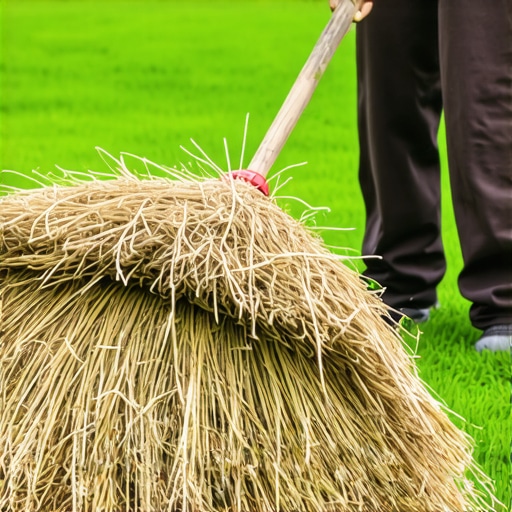
The proper way to use a thatching rake involves using the curved tines to slice through the organic mat at a 45-degree angle, pulling the debris upward to clear the soil-to-atmosphere interface. This process restores oxygen gas exchange and allows moisture to reach the root zone.
Understanding the biology of thatch is the difference between a landscaper and a mower. Thatch consists of roots, stems, and shoots that contain high amounts of lignin. Unlike grass clippings, which are 90 percent water and decompose in days, lignin-heavy material takes months or years to break down. When this layer exceeds half an inch, it becomes hydrophobic. You can run your irrigation for an hour, but the water will never hit the dirt. It sits in the thatch, evaporates, or promotes fungal pathogens. You are essentially wearing a plastic coat and wondering why your skin is dry. We use a manual thatching rake for precision on smaller plots or localized problem areas where a power rake would be too aggressive. It is a surgical tool, not a blunt instrument.
“Excessive thatch (more than 0.5 inches) acts as a barrier to water and air, leading to shallow rooting and increased disease susceptibility.” – Penn State Extension
How do I know if my lawn needs dethatching?
Check the depth. Cut a small wedge of turf out with a spade. If the brown layer between the soil and the green is thicker than the width of your thumb, you are in trouble. Another sign is a lack of response to fertilizer. If you feed the lawn and nothing happens, the nutrients are likely trapped in the thatch layer, feeding microbes instead of the grass. Look for localized dry spots. When the thatch gets too thick, it repels water. You will see patches of brown even when the rest of the yard is green. This is a structural failure of the yard, not a lack of water.
| Dethatching Method | Labor Intensity | Removal Efficiency | Recovery Time |
|---|---|---|---|
| Thatching Rake (Manual) | Extreme | High (Localized) | 3-5 Days |
| Power Rake (Mechanical) | Moderate | Very High | 7-10 Days |
| Vertical Mowing | Low | Aggressive | 14-21 Days |
| Liquid Dethatcher | Zero | Minimal/Slow | N/A |
The Forensic Step-by-Step Clean-out Process
Dethatching a lawn requires a methodical approach that begins with mowing the turf to its lowest recommended height and ends with a thorough yard cleanup to prevent the re-deposition of organic debris. Executing this correctly ensures the crown of the plant remains intact while the debris is excavated.
First, you must prep the site. I see hacks go into a dry lawn with a rake and rip the roots right out of the ground. The soil needs to be moist but not saturated. If it is bone dry, the grass is brittle. If it is muddy, you will pull up huge chunks of dirt, ruining your grade. Mow the grass down to about 1 inch. This gives the rake tines direct access to the debris layer. Set your feet. This is a physical tax. You pull the rake toward you with short, firm strokes. You will feel the tines grab. That is the resistance of the mat. If you aren’t seeing brown, fibrous material coming to the surface, you aren’t deep enough. If you are seeing nothing but black soil, you are digging too deep. Adjust the angle. It is a finesse game.
- Flag all irrigation heads to avoid shattering plastic with the steel tines.
- Scan for surface roots from nearby trees; do not rake over them.
- Work in a grid pattern to ensure 100 percent coverage of the area.
- Bag the debris immediately; leaving it on the lawn will suffocate the grass further.
- Follow up with a nitrogen-heavy fertilizer to jumpstart recovery.
“Thatch is not soil; it is a tight mat of living and dead stems, leaves, and roots that can impede the movement of water, air, and fertilizers into the soil.” – Texas A&M AgriLife
What is the best time of year to use a thatching rake?
Timing is everything. For cool-season grasses like Kentucky Bluegrass or Fescue, you rake in the early fall or very early spring. These are the periods of peak growth. For warm-season turf like Bermuda or Zoysia, you wait until the late spring when the grass is fully awake. Never dethatch a dormant lawn. You are essentially performing surgery on a patient who cannot heal. You want the grass to be able to fill in the gaps you just created within 48 hours. If you rake a dormant lawn, you are just opening the door for invasive weed seeds to take hold in the exposed soil.
Yard Cleanup and Post-Raking Recovery
A comprehensive yard cleanup after dethatching is non-negotiable because the excavated thatch can harbor fungal spores and pests that will reinfect the turf if left to settle. Once the debris is removed, core aeration and overseeding are often necessary to rebuild density.
After you have pulled up the mountains of brown fluff, you need to get it off the property or into a compost pile far away. Do not mulch it back into the lawn. That defeats the entire purpose. This is also the perfect time to evaluate your irrigation. If your thatch was thick, your heads might be sitting too low. Adjust them. Check your spray patterns. After the thatch is gone, the soil is exposed and vulnerable. This is the best window for a sod install if you have bare patches. The soil-to-root contact will be at its maximum. If the lawn is still thin, overseed. The rake has already created the perfect seedbed. You have done the hard work of clearing the slate; now you have to manage the regrowth. It is a cycle. Stay on top of it, or you will be back out here with a rake in twelve months. Don’t be the guy who waits until the lawn is dead to care about the soil.