
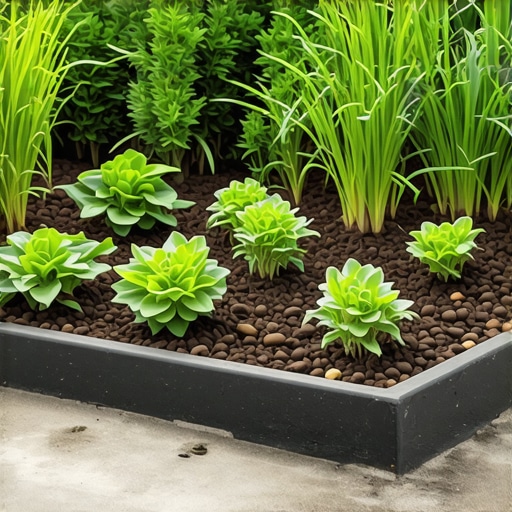
The Engineering of a Professional Garden Edge
A defined garden edge acts as a physical barrier that prevents turfgrass rhizomes from invading planting zones, stabilizes soil moisture levels, and stops nutrient leaching during heavy irrigation. It protects the root flare of woody ornamentals and maintains the structural integrity of your landscaping layout while preventing soil erosion. To a hack, an edge is a cosmetic line. To a professional, it is a structural dam. It separates two distinct biological systems: the high-nitrogen environment of the turf and the fungal-dominant ecosystem of the perennial bed. Mixing these is a recipe for disaster.
The Hardscape Autopsy: Why Your Bed is Failing
I recently got called out to tear up a $30,000 patio and garden suite that was sinking and infested with weeds. The homeowner was baffled. They had paid a crew to do a full yard cleanup and landscaping overhaul just two years prior. I took one look at the transition between the sod and the mulch and saw the problem immediately. The previous contractor didn’t install a structural edge. They just threw mulch over the grass. Within eighteen months, the Kentucky Bluegrass rhizomes had tunneled under the mulch, the irrigation spray had washed the soil out of the beds, and the resulting hydrostatic pressure had pushed silt into the paver base, causing the entire patio to heave. I told the owner: if you don’t fix the soil grading and install a 4-inch vertical break, every plant you put in the ground is just expensive compost. You cannot fight biology with a leaf blower. You need a trench.
“A retaining wall doesn’t fail because of the stone; it fails because of the water trapped behind it. Similarly, a garden bed fails when the edge cannot contain the hydraulic force of saturated soil.” – Hardscape Engineering Axiom
The Micro-Biology of the Boundary Layer
Why does a clean edge actually make plants grow better? It comes down to the nitrogen cycle and oxygen diffusion. When grass creeps into your garden bed, it competes for the same macronutrients: Nitrogen (N), Phosphorus (P), and Potassium (K). Turfgrass is a glutton. It will strip the top three inches of soil of available nitrogen before your hydrangeas even wake up in the spring. A deep spade-cut edge or a mechanical barrier like 14-gauge steel creates a ‘dead zone’ for roots. This is called air-pruning. When a root hits the air gap of a trench, it stops. This forces the plant to focus its energy on the interior of the bed rather than fighting an invasive turf war. It is not about looks. It is about resource allocation. Most homeowners ignore the sod install mechanics. They think the grass stops where the green stops. It doesn’t. The stolons are always moving.
How Deep Should a Garden Edge Be to Stop Grass Roots?
To effectively stop invasive turfgrass like Bermuda or Zoysia, a garden edge must be at least 4 to 6 inches deep to intercept the rhizome network. Most ‘big-box’ plastic edging is only 3 inches tall, which is practically useless as it allows roots to dive underneath the barrier within a single growing season. For cool-season grasses like Fescue, a 4-inch spade-cut trench is often sufficient, provided it is maintained twice a year. If you are dealing with aggressive spreading grasses, you need a physical barrier of 12-gauge steel or a poured concrete curb. Don’t skip the depth. Deep roots require deep solutions.
| Edging Material | Typical Depth | Lifespan | Best For |
|---|---|---|---|
| Spade-Cut Trench | 4-6 inches | 6 months | Natural look, high maintenance |
| 14-Gauge Steel | 4-5 inches | 25+ years | Clean lines, modern design |
| Paver Cobblestone | 6-8 inches | 15+ years | Traditional looks, heavy soil |
| Poured Concrete | 6 inches | 30+ years | Permanent boundaries |
Does Landscape Edging Prevent Weeds Effectively?
Landscape edging prevents weeds by creating a vertical height differential that stops wind-blown seeds from settling into the bare soil of the bed and by blocking underground stolons. However, edging is only 50% of the battle: the other 50% is the irrigation management and mulch depth. A defined edge allows you to maintain a consistent 3-inch layer of hardwood mulch without it spilling onto the lawn. This mulch layer smothers weed seeds. Without the edge, the mulch thins out at the perimeter, creating a ‘light gap’ where weeds like crabgrass and nutsedge will thrive. It is a system. The edge is the wall. The mulch is the floor. You need both. If you see weeds at the border, your edge is too shallow. Period.
The Irrigation and Drainage Factor
When we do a sod install, we have to look at the ‘sheet flow’ of water. During a heavy rain, water moves across your lawn in a thin sheet. If your garden beds are flush with the grass, that water carries silt and weed seeds directly into your mulch. A defined edge acts as a micro-swale. It catches that runoff and directs it down into the soil profile rather than across the surface. This prevents nutrient leaching. I see guys all the time who complain their fertilizer isn’t working. It’s because their lack of edging has turned their garden into a waterslide. The nitrogen is in the street, not the soil. Check your levels. If you have standing water at the edge of your bed, your grading is off. Fix it before you plant.
Checklist for a Professional Grade Edge
- Identify the ‘Mow Line’: Mark the curve with a garden hose or marking paint to ensure a smooth radius.
- The 90-Degree Cut: Use a sharp spade to cut vertically, not at an angle. An angled cut allows grass to ‘ramp’ into the bed.
- Clear the ‘V-Trench’: Remove the sod and soil to a depth of 4 inches, creating a clean valley.
- Manage the Root Flare: Ensure the soil level inside the bed does not bury the base of your trees.
- Compaction Check: Tamp the base of the trench to prevent soil collapse during the first rain.
“Soil pH and nutrient availability are localized phenomena; without a defined edge, your turf’s high-nitrogen runoff will chemically alter the acidic environment required by many ornamental shrubs.” – Horticultural Manual Vol. 4
The Long-Term Maintenance Reality
You can’t just cut an edge once and forget it. Nature wants to blur lines. Every spring, you need to go back in and clean the trench. If you’re using a mechanical edger, don’t scalp the grass. Scalping creates a high-pH ‘burn zone’ where opportunistic weeds like Clover and Dandelion will take root. Keep your blades sharp. A dull blade tears the grass blades, leading to fungal pathogens like Brown Patch. Landscaping is about precision. If you treat your yard like a construction site, it will look like one. Treat it like a biological laboratory. Measure your depths. Check your irrigation coverage. Keep your edges sharp. That is the secret to a yard that actually grows. It is not magic. It is engineering. Don’t be the guy with the sinking patio. Do the work once. Do it right.”