
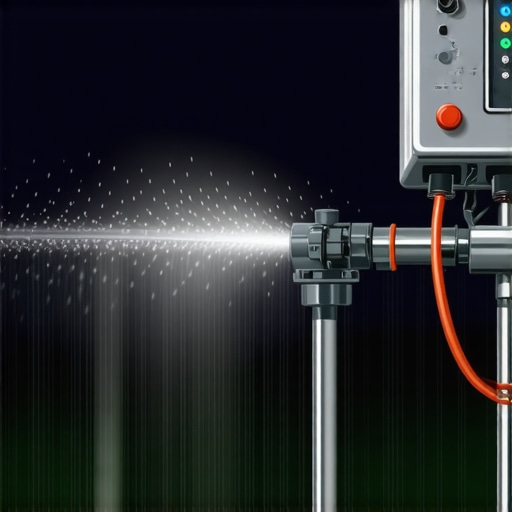
The Anatomy of a Failing Irrigation Controller
A sprinkler controller resets every night typically because of intermittent power surges, a failing internal backup battery, or short circuits in the solenoid valves. These electrical faults disrupt the microprocessor’s memory, forcing a factory reset to prevent hardware damage from uncontrolled current spikes or low voltage scenarios. Most homeowners mistake this for a software glitch when it is almost always a physical hardware failure in the field wires or the transformer itself.
I always drill into my new crew members: if you don’t fix the soil grading first, every plant you put in the ground is just expensive compost. The same logic applies to irrigation. You can buy the most expensive Wi-Fi enabled controller on the market, but if you have a nicked 18-gauge wire buried four inches deep in heavy clay, that controller is going to fail. I remember a job last July where a homeowner had spent four grand on a new sod install. Within two weeks, the lawn was turning a sickly straw color because his controller was resetting to 12:00 every single night. He thought it was a ghost. It wasn’t a ghost; it was a poorly spliced wire at the master valve that was grounding out every time the soil hit a certain moisture threshold. We had to dig up the entire run because the previous contractor didn’t use waterproof grease nuts. It’s the small, invisible details that dictate whether a landscape thrives or dies.
“Irrigation system performance is heavily dependent on electrical integrity; a variation of 10 percent in voltage can lead to solenoid failure or controller logic errors.” – Penn State Extension Office
The Forensic Diagnosis: Why the Memory Wipes
When you see that blinking 12:00 or a blank screen, you are looking at a system that has lost its temporal orientation. Inside that plastic box is a logic board that operates on low-voltage DC power, converted from your home’s 120V AC outlet. If the transformer, that heavy block plugged into the wall, starts to fail, it produces ‘dirty power.’ This fluctuation in current causes the processor to reboot. Think of it like a computer in a thunderstorm. Without a stable 24V AC output, the system cannot maintain its internal clock. Furthermore, many older units rely on a small lithium battery or a capacitor to hold the memory during brief outages. If that battery is ten years old, it’s dead. Every time the power flickers for a millisecond, your schedule vanishes. You are left with a system that doesn’t know it is Tuesday, and your new sod is the one that pays the price.
Identifying Short Circuits in the Solenoid Field
A common culprit is the solenoid, the electromagnet that sits on top of each valve. These components have a specific resistance, usually measured between 20 and 60 ohms. When a solenoid coil begins to melt internally, the resistance drops. When the controller tries to ‘fire’ that zone, it demands too much amperage. To save itself from catching fire, the controller resets. This is why the clock might look fine all day, but as soon as the 2 AM cycle starts, the unit crashes. You need a multimeter to find this. Test the ohms at the controller terminals. If you see a reading of 10 ohms or less, you have a short. If it is 0, the wire is cut. This is not guesswork; it is basic electrical engineering. Don’t let a mow-and-blow hack tell you that you need a whole new system when you really just need a fifteen dollar solenoid and a proper waterproof splice.
| Symptom | Probable Cause | Diagnostic Action |
|---|---|---|
| Clock Resets to 12:00 | Failed Backup Battery | Replace CR2032 or 9V Battery |
| Screen Goes Blank Under Load | Solenoid Short Circuit | Test Ohms at Controller Terminals |
| Unit Reboots Randomly | Faulty Transformer | Check 24V AC Output with Multimeter |
| Zone Won’t Turn Off | Mechanical Valve Failure | Inspect Diaphragm for Debris |
The Impact of Soil Chemistry on Irrigation Wiring
Soil is not just dirt; it is a chemically active medium. In regions with high alkalinity or heavy salt content, poor quality wire insulation will degrade. Once the copper is exposed to the moisture of a daily irrigation cycle, electrolysis occurs. The wire literally dissolves into the soil. This creates high resistance, which causes the controller to work harder to push the current through. Eventually, the voltage drop is so significant that the controller’s safety sensors trigger a hard reset. This is why we only use direct-burial rated UF wire. Anything else is a ticking time bomb buried under your yard cleanup project.
How much water does new sod need per day?
New sod requires approximately 1/4 inch of water twice daily for the first two weeks to ensure the root zone stays saturated. If your controller is resetting, your sod is likely missing these critical windows. Without consistent moisture, the peat or soil backing on the sod will shrink, creating gaps between the pieces. Once those edges dry out, the grass will die from the outside in. You cannot ‘catch up’ on watering once the roots have desicated. You must fix the controller immediately or risk losing the entire installation investment.
“Proper grounding of irrigation controllers is essential to dissipate lightning-induced surges before they reach sensitive solid-state components.” – Irrigation Association Standards
Why does my sprinkler clock reset to midnight?
The reset to midnight is the default factory setting for most microprocessors when they lose power without a functional backup battery. This usually happens during the ‘handshake’ between the controller and the solenoid. If the surge protector in the unit detects a spike, it kills the logic circuit to prevent a fire. If your unit is outside, check the GFI outlet. A tripped GFI will also cause an immediate power loss. If you find yourself resetting the time every morning, stop. The machine is telling you there is a hardware conflict. It is a cry for help from the electrical components buried in your lawn.
- Check the transformer output voltage (should be 22-28V AC).
- Replace the internal backup battery annually.
- Inspect the rain sensor for spider webs or debris that may cause a false short.
- Ensure all wire splices are in a dry valve box using silicone-filled connectors.
- Verify that the common wire is securely fastened to the terminal strip.
The Remediation Process: Fixing the Loop
To fix a resetting controller, start at the source. Unplug the transformer and check the prongs for corrosion. If the power source is clean, move to the terminal strip. Disconnect the ‘Common’ wire and all zone wires. Plug the unit back in and set a manual run. If the controller stays on while ‘running’ a zone with no wires attached, the controller is fine and your problem is in the field. If it still resets with no wires attached, the internal logic board is fried. This forensic approach saves you from buying parts you don’t need. Landscape maintenance is about precision, not throwing parts at a problem until it disappears. Once the electrical issue is resolved, return to your yard cleanup. Ensure no mulch is covering your valve box lids. Heat trapped in those boxes can also cause solenoid expansion and subsequent electrical failure. Keep the system cool, dry, and properly grounded. It is a machine; treat it like one.