
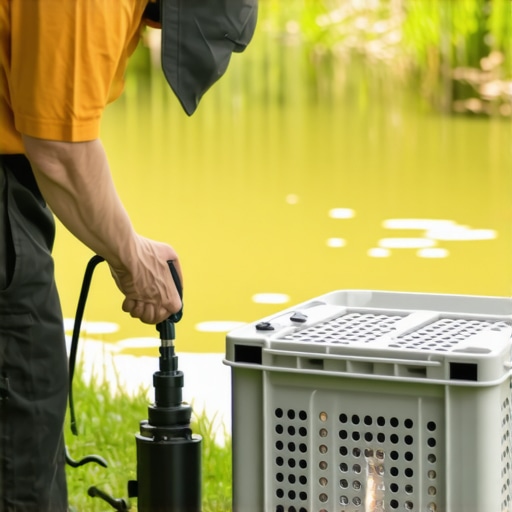
The Physics of Debris: Why Your Pump Motor is Burning Out
A pond pump fails when organic debris exceeds the intake capacity of the impeller, causing the motor to work harder against head pressure and eventually overheat. This mechanical failure usually stems from a lack of adequate pre-filtration, where small particles of leaves, sludge, and algae bypass standard screens and jam the internal components. It will die. If you do not provide a physical barrier that increases the surface area of suction, you are essentially asking your pump to commit suicide through cavitation.
I recently got called out to a job where the homeowner had spent upwards of five figures on a custom waterfall. Within three months, the pump was screaming like a banshee. I pulled it out and found it choked with string algae and decomposed sod. The previous contractor didn’t account for the hydrostatic pressure or the simple fact that gravity pulls every bit of yard cleanup waste directly into the lowest point of the property—the pond. The fix wasn’t a new $800 pump; it was a five-dollar plastic crate and some engineering common sense.
“Submersible centrifugal pumps in residential water features are prone to premature failure when the intake velocity is concentrated over a small surface area, leading to rapid clogging from suspended solids.” – Pond Management Technical Manual
How do I stop my pond pump from clogging?
To stop a pond pump from clogging, you must increase the surface area of the intake by housing the pump in a perforated cage, such as a milk crate, wrapped in a coarse filter media or mesh. This distributes the suction force across a wider field, preventing large debris from pinning itself directly against the pump’s primary intake screen.
The Milk Crate Hack: A Detailed Engineering Breakdown
The milk crate hack works by creating a buffer zone of low-velocity water movement around the pump intake, allowing heavier solids to settle before they reach the impeller. By increasing the surface area from a few square inches to several square feet, you drastically reduce the PSI exerted on any single point of the filter mesh. This is basic fluid dynamics. When you concentrate suction, you create a vacuum that pulls in everything. When you spread that suction out, you get clean water flow. It is simple math.
| Component | Material Purpose | Technical Specification |
|---|---|---|
| Milk Crate | Structural Cage | HDPE Plastic, 12x12x10 inch |
| Filter Mat | Primary Pre-filter | Coarse 2-inch thickness, non-toxic |
| Zip Ties | Attachment Security | UV-resistant Nylon, 50lb tensile |
| River Stones | Ballast/Weight | 3-5 inch diameter, inert granite |
To build this, you need to cut a precise hole in the side of the crate for the discharge pipe. Don’t eyeball it. Measure the diameter of your PVC or kink-free tubing. Line the interior of the crate with a coarse filter mat. Do not use fine foam; it will clog in two days and starve the pump of water, leading to dry-running and motor burnout. Secure the mat with zip ties every four inches. Place the pump in the center, surround it with a few large river stones to prevent it from rattling, and seal the lid. Your maintenance interval just went from once a week to once a season.
The Critical Link Between Sod Installation and Pond Health
When you perform a sod install near a water feature, the soil grading and initial watering cycles will inevitably wash fine sediment and nitrogen-rich runoff into the pond. This runoff spikes the nutrient load, leading to algae blooms that are the number one cause of pump clogs. Most contractors just roll out the grass and leave. I don’t. I ensure there is a buffer zone of river rock or a slight swale to catch that sediment before it hits the water. If the grade is wrong, your pond becomes a sediment trap. No pump can survive that for long.
How much modified gravel do I need for a pond base?
A standard pond base requires a 3-inch layer of clean-washed river stone over a 45-mil EPDM liner, typically calculating to roughly 1.5 tons of stone per 100 square feet of pond surface area. This layer protects the liner from UV degradation and provides a biological surface for nitrifying bacteria to colonize, which helps break down the organics that would otherwise clog your pump.
Integrating Irrigation and Yard Cleanup for Water Quality
Your irrigation system should never spray directly into the pond. This isn’t just about water levels; it is about chlorine and chloramines from city water or high-mineral content from well water disrupting the biofilm. During your yard cleanup, avoid using leaf blowers near the pond edge. Manual raking is the only way to prevent a massive organic load from overwhelming your new milk crate filter. If you blow grass clippings into the water, you are injecting nitrogen directly into the system, which feeds the very algae that will eventually stop your pump. Stop doing it.
“Effective pond filtration requires both mechanical and biological components to maintain a balanced nitrogen cycle and prevent the accumulation of sludge (benthic organic matter).” – Penn State Agricultural Extension
- Check intake daily for the first week after any new sod install.
- Clean the crate mesh whenever you notice a 10% decrease in waterfall flow.
- Inspect the discharge pipe for any signs of backpressure.
- Verify 811 / Dig Safe markings before adjusting any underground irrigation lines near the pond.
- Monitor water pH; a sudden drop indicates decaying matter inside the filter.
Landscaping is about managing entropy. The pond wants to fill with dirt. The pump wants to move water. Your job is to facilitate that movement by outsmarting the debris. The milk crate hack is a professional-grade solution for a common engineering problem. Use it or keep replacing pumps. The choice is yours. It is that simple. This isn’t about aesthetics; it is about mechanical efficiency and the longevity of your investment. Build it right the first time and stop the cycle of failure. Your hands might get dirty, but your water will stay clear. Dig deep. Get it done.